Jake Hinton • May 6, 2024

Water Management in Borrego Springs: The Role of the Watermaster

Share

The Role of the Borrego Watermaster in Groundwater Management

Understanding water management in Borrego Springs includes considering the role of the Borrego Watermaster. Established through a court-supervised adjudication, the Borrego Watermaster oversees the management of groundwater in accordance with the Sustainable Groundwater Management Act (SGMA) and a court-ordered Judgment.

The Borrego Springs Groundwater Subbasin


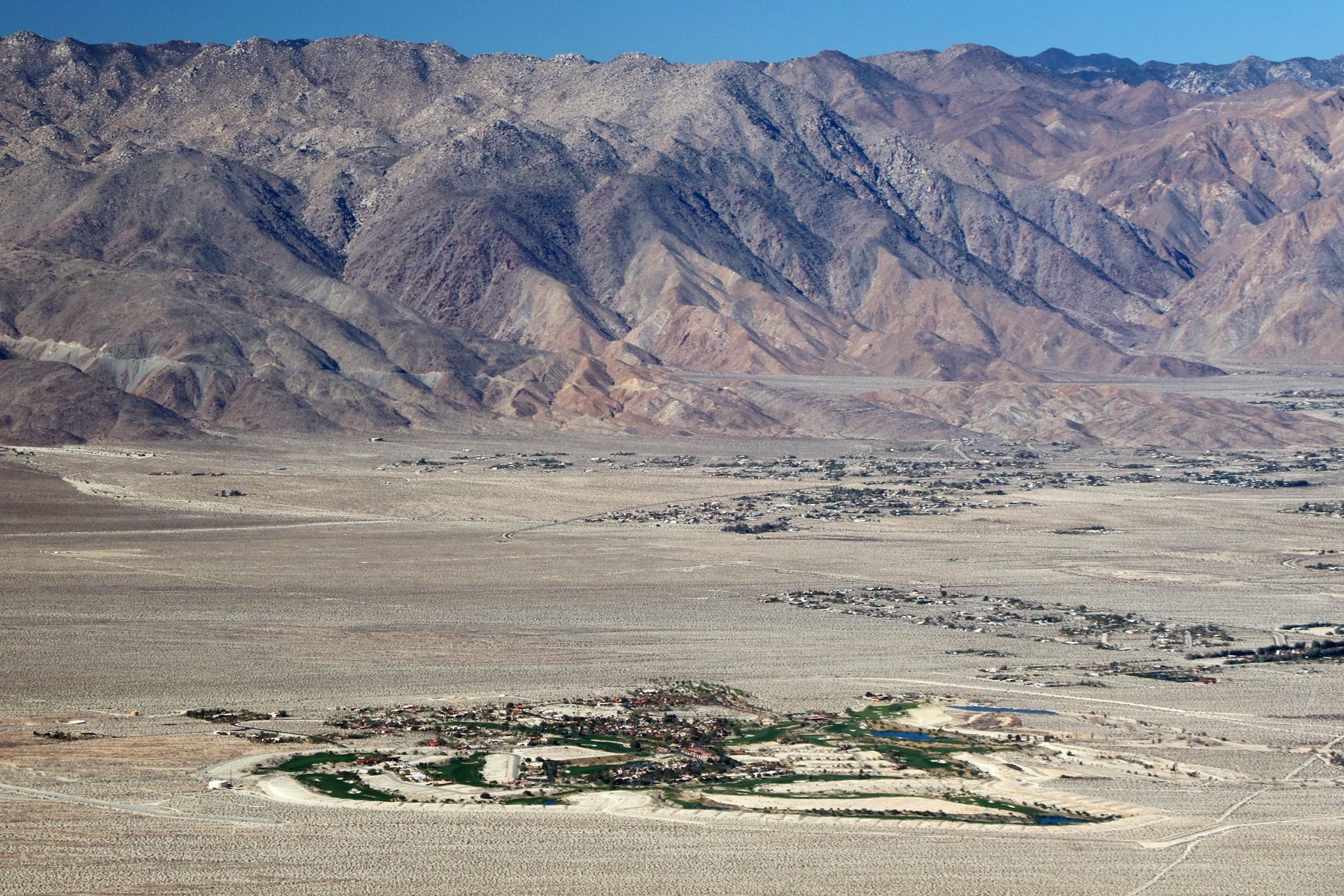
The Borrego Springs Groundwater Subbasin spans approximately 98 square miles across Borrego Valley and is bordered by bedrock formations, faults, and significant geological features. The subbasin lies within San Diego County's jurisdiction and is surrounded by California State-owned land. It primarily consists of agriculture, residential, and recreational land uses, with water and sewer services provided by the Borrego Water District (BWD).


Who is the Borrego Watermaster?


The Borrego Watermaster is a committee of representatives from the sectors affected by the Judgment, including agriculture, recreation, the Borrego Water District, and the community. The Watermaster's primary role is to implement a groundwater management plan to ensure that groundwater pumping is reduced to sustainable levels by 2040. The Watermaster supervises groundwater levels and quality, enforces water allocations, and collaborates with the BWD on water management.


The Role of the Watermaster


The Watermaster's responsibilities include:


  • Overseeing the reduction of groundwater pumping to achieve sustainability.


  • Monitoring groundwater levels and water quality to manage the basin effectively.


  • Enforcing water rights and allocations as per the court-ordered Judgment.


Challenges and Ongoing Projects


The Watermaster faces challenges due to the historical over-pumping of groundwater, which led to significant drops in groundwater levels. To address this, the Watermaster is involved in several projects, including:


  • Expanding the Groundwater Monitoring Program to improve data collection.


  • Redetermining the Sustainable Yield to update estimates for water management.


  • Restoring Fallowed Lands to ensure unused agricultural land is rehabilitated.


The Technical Advisory Committee


A Technical Advisory Committee (TAC) advises the Watermaster on technical matters related to groundwater management. The TAC makes recommendations based on the best available data to ensure sustainable management of the Borrego Springs Groundwater Subbasin. The TAC's duties include analyzing water budgets, identifying undesirable results, and improving water budget assumptions to enable better adaptive management.


Staying Informed


To follow the Watermaster's progress in managing Borrego's water resources, visit their official website here for the latest updates, meeting agendas, and data on water management activities.


Learn More About Borrego Springs

July 8, 2026
The Southern California architect explains how thoughtful design, floor-to-ceiling glass and the surrounding desert shaped one of Borrego Springs' most distinctive homes.
By Andrea McKenna July 8, 2026
When the future of the Community Concert Association was uncertain, Bill Wright inspired a path forward through growth, volunteers and community support. As the Borrego Springs Community Concert Association announces its new season, it is worth remembering the people who helped keep this tradition alive. Founded in 1975, the all-volunteer nonprofit brings high-quality, eclectic music to Borrego Springs. Each season includes five public concerts and four free educational concerts for local students. Children are bused to the Borrego Springs Performing Arts Center to experience professional live music, and musicians also visit local schools for interactive programs that introduce students to music up close. That tradition almost came to an end. When the Association had fallen on hard times (2015) and was preparing to disband, Bill Wright stepped forward. By reaching out to his many business associates, Bill raised enough money to help save the organization and keep professional musicians coming to the Borrego stage. Among his written correspondence with the board, Bill Wright repeatedly advocated for “growth, not reduction,” encouraged members to “recruit new volunteers” and “develop sponsorship opportunities,” and closed one letter with a promise that captured his commitment: “We will do more than our share to keep the great music series going.”
By Andrea McKenna July 8, 2026
The inaugural issue highlights the stories, people and experiences that make Rams Hill and Borrego Springs a truly unique destination. 
By County of San Diego Communications Office July 7, 2026
By County News Center , County of San Diego Communications Office It’s getting hot out there. And when the heat is extreme — which can happen in the summer and even fall months in San Diego County — it can be dangerous for people and pets. Here are some tips to help you, your friends and loved ones stay safe when the temperatures spike. Remember, extreme heat can cause body temperatures to soar. And that can cause heatstroke, exhaustion, dizziness, nausea, confusion, headache and even death. People who are particularly at risk are children, older adults, people with chronic medical conditions, someone who is pregnant, and outdoor workers. Cool Zones and Indoor Relief — Places to Stay Cool The County’s Cool Zones, including the County’s 33 branch libraries , community centers and other locations, offer people safe, air-conditioned sanctuaries from the heat. Here is a complete list of County Cool Zone sites , their hours and locations. You can also use the County’s interactive link that lets you search for Cool Zone sites by location, ZIP code, organization and by what animals are allowed. What to DO if Someone Shows Signs of Heatstroke Call 9-1-1 immediately. Signs of heatstroke include dizziness, nausea, confusion and headache. Begin cooling the person right away. Move them into the shade; spray them with cool water and fan them. If they are alert, place them in a cool shower and monitor their body temperatures. DO NOT give them fluids; a person with heatstroke may not be able to swallow safely. What to DO if Someone Shows Signs of Heat Exhaustion Signs include being faint or dizzy, excessive sweating, cool/pale/clammy skin, nausea/vomiting, rapid/weak pulse and muscle cramps. Get the person to a cooler, air-conditioned place. Have the person drink water if fully conscious. Place them in a cool shower or use cold compresses. Tips to Help People Avoid Heat-Related Problems Stay in an air-conditioned space during the hottest hours of the day. Don’t rely on electric fans alone when temperatures exceed 90 degrees. Wear light, loose-fitting clothing. Drink plenty of water and avoid alcohol and sugary drinks. Take cool showers. Never leave a child, elderly person, or pet unattended in a car — even briefly. Limit outdoor activity during the hottest part of the day. Wear sunscreen and a wide-brim hat if you must be in the sun. Avoid using the oven to keep indoor temps lower. Tips to Keep Your pets cool in hot weather Keep your pets indoors if it is cooler inside. Exercise pets in early morning hours or early evening only. Keep your pets’ water supply in a tip-proof container, always topped off, and be sure it stays cool (pets will not drink water that is too hot). Consider a misting system to keep the outdoor areas cooler. Be sure your pet has shade ALL DAY, if they are outside. Remember, the sun’s position changes during the day. Avoid car trips; vehicles heat up dangerously fast. On an 85-degree day, a car can reach 102 degrees in 10 minutes and soar upward even with the windows down an inch or two. Check pavement temperatures; if it is too hot for your bare feet, it’s too hot for paws. Offer a shallow wading pool or misting area. Watch for signs of heat stress: heavy panting, drooling, vomiting, lethargy, or stumbling. Seek veterinary help immediately if you notice these.  The sun is beautiful, but dangerous in extreme heat. So, stay cool, check on vulnerable neighbors and keep pets safe!
By Andrea McKenna July 7, 2026
Make a Night Sky Tour Part of Your July Getaway
By Andrea McKenna July 7, 2026
Sylvia Maas’ nearly 7,000-kilometer ride from Norway to Spain ended after a serious knee injury during the NorthCape–Tarifa adventure.
By Andrea McKenna July 6, 2026
Golf, restaurant and Ram Shack operations will pause as crews prepare the course for the season ahead.
By California Wolf Center July 6, 2026
Limited-time summer promotion encourages families to explore wolf conservation and education in Julian.
By Dennis Mammana July 5, 2026
By Dennis Mammana Week of July 5-11, 2026 There's a constellation in our night sky right now that is somewhat unknown to stargazers. Despite being huge — it's the 11th-largest in all the heavens — it has no stars brighter than the North Star, so you won't find it easily without a pretty dark sky. Its name is Ophiuchus (oh-fee-YOU-kuhs), and if you'd like to find it this month, you'll need to get away from the city lights and gaze midway up in the southeast shortly after dark. Ophiuchus (the serpent-bearer) represents Aesculapiu, the ancient Greco-Roman god of medicine, healing and physicians, and its brightest star is named Rasalhague, which is Arabic for "Head of the Snake Charmer." Draped from one side of Ophiuchus to the other lies Serpens — the only two-part constellation in the heavens — with its head on one side (Serpens Caput) and its tail on the other (Serpens Cauda). I admit that it requires quite an imagination to find these star groupings, but once you do, you'll know them forever. In fact, you may even recognize this shape, especially if you've ever searched online for the name of a physician. Quite often, you'll find the image of two serpents wrapped around a vertical staff that appears topped by a round knob and is flanked by wings. It's known as the "caduceus," and since 1902, when the U.S. Army adopted it as the insignia of its Medical Corps, it has been the familiar emblem of the American medical profession. Many medical associations — including the World Health Organization — use what some consider to be the "correct" and traditional symbol of medicine: the staff of Asclepius, with a single serpent encircling a staff. Either way, people have long associated the serpent with medicine. Once you find its stars, you'll see that Ophiuchus lies along some of the thickest star clouds of the Milky Way. If you've managed to get yourself to a rural location with a non-light-polluted sky, you'll have little trouble finding the hazy band of the Milky Way passing near this constellation, along with the bright reddish-orange star Antares (the heart of Scorpius, the scorpion) just to its lower right. Be sure to take binoculars with you so you can scan this celestial region. Here you'll find countless "faint fuzzies" (as amateur astronomers affectionately call deep-sky objects). Many of these are star clusters — collections of dozens, hundreds or even thousands of stars held together by gravitation — and interstellar nebulae, where stars and planetary systems are constantly forming. Now, while you're gazing at the stars of Ophiuchus, here's a little tidbit to wrap your head around: This constellation is not one of the official signs of the zodiac, but it should be. Why, you ask? Because the sun spends three times as many days in front of the stars of Ophiuchus as it does in Scorpius. So why, then, is this constellation missing from the official zodiacal signs in horoscope tables? Your guess is as good as mine. Just remember, if you were born between Nov. 29 and Dec. 17, you're not a "Scorpio" or "Sagittarius," as you might have thought. You're actually an Ophiuchan! Make of that what you will... Visit Dennis Mammana at dennismammana.com. To read features by other Creators Syndicate writers and cartoonists, visit the Creators Syndicate website at www.creators.com . Learn More About Borrego Springs

Show More

Share This Post