Jake Hinton • June 10, 2024

The Montezuma Grade: Anza Borrego State Park

Share
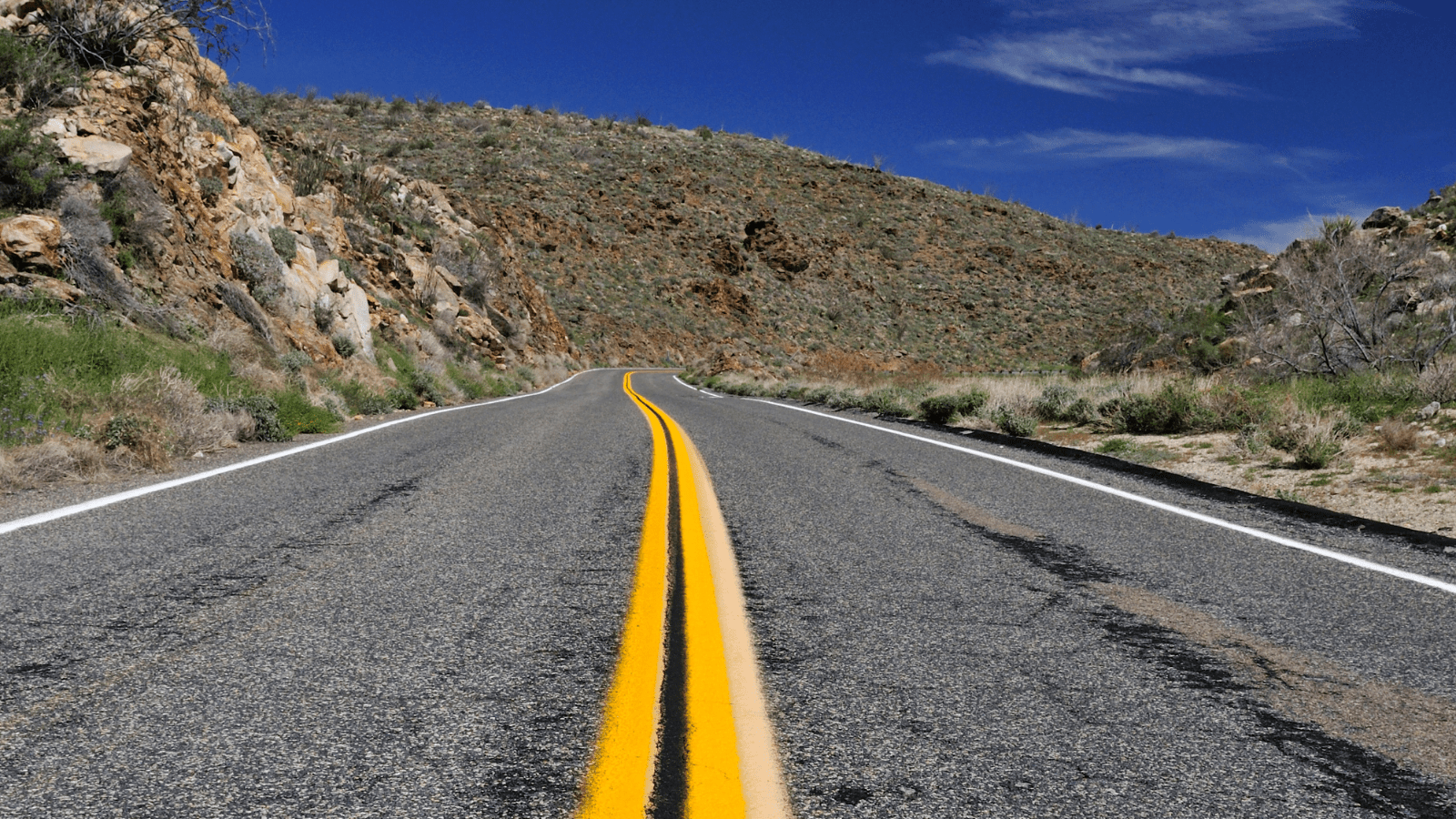
The Montezuma Grade

Quick Facts about Montezuma Grade (The Glass Elevator)


Scenic Route


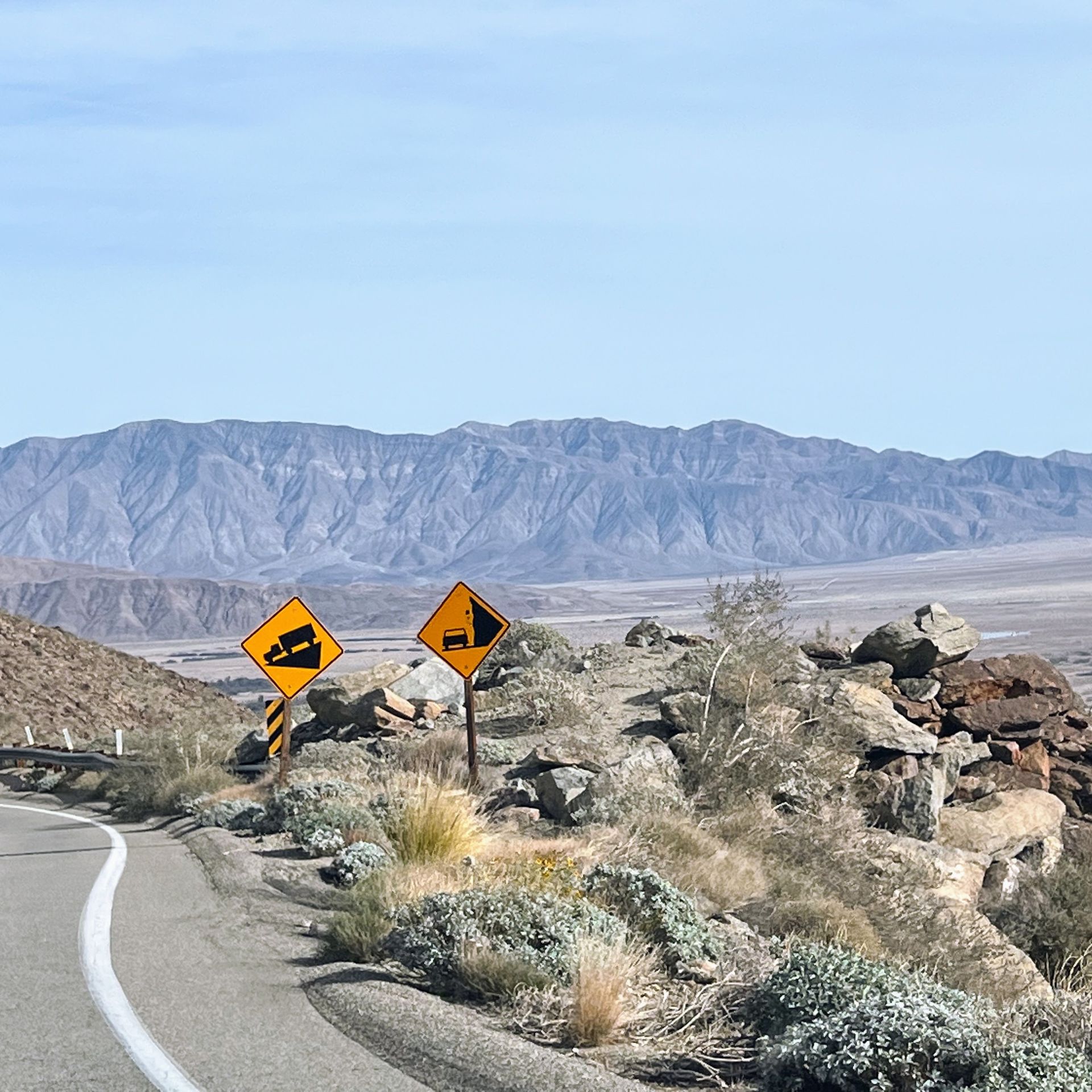
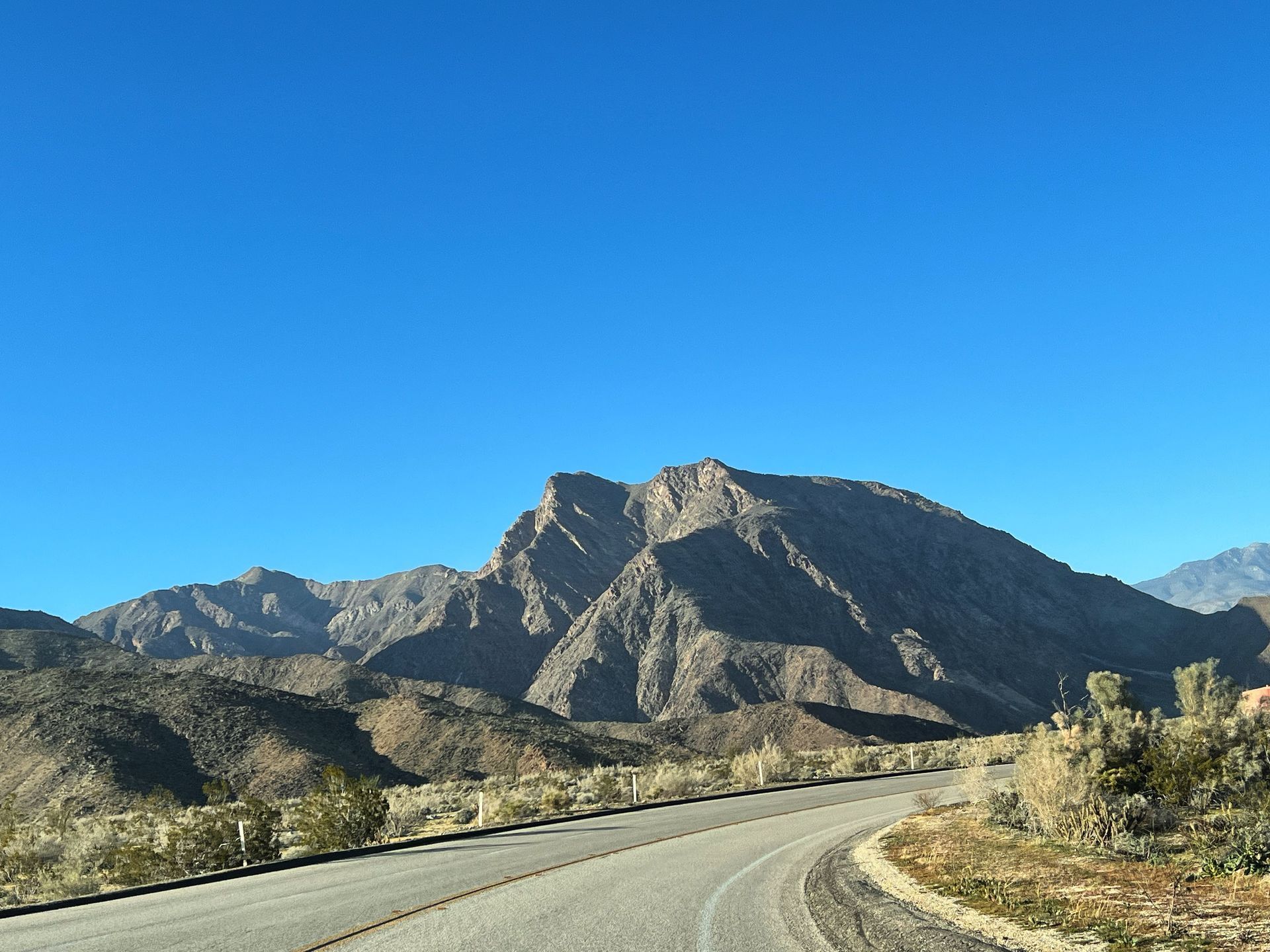
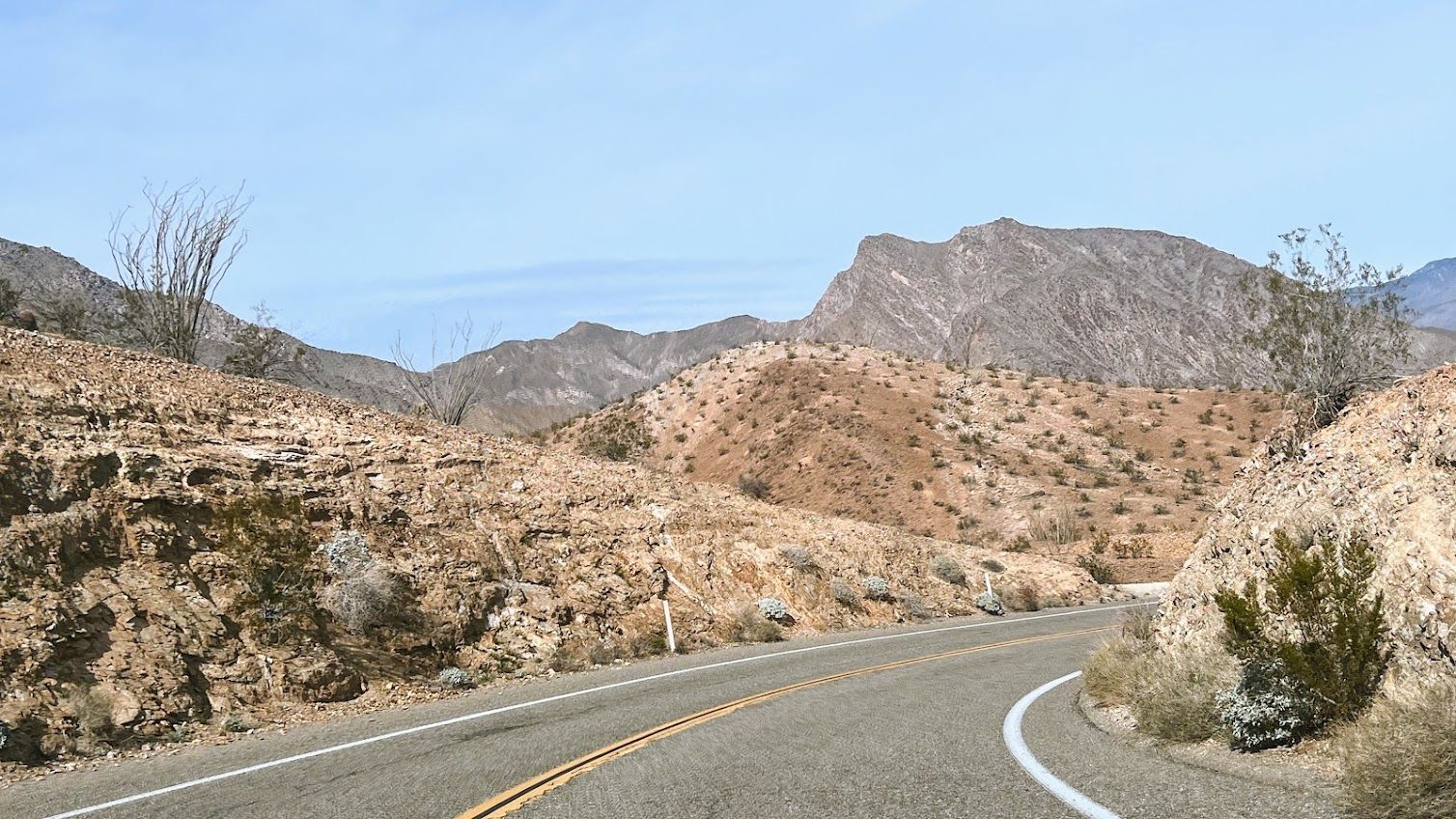
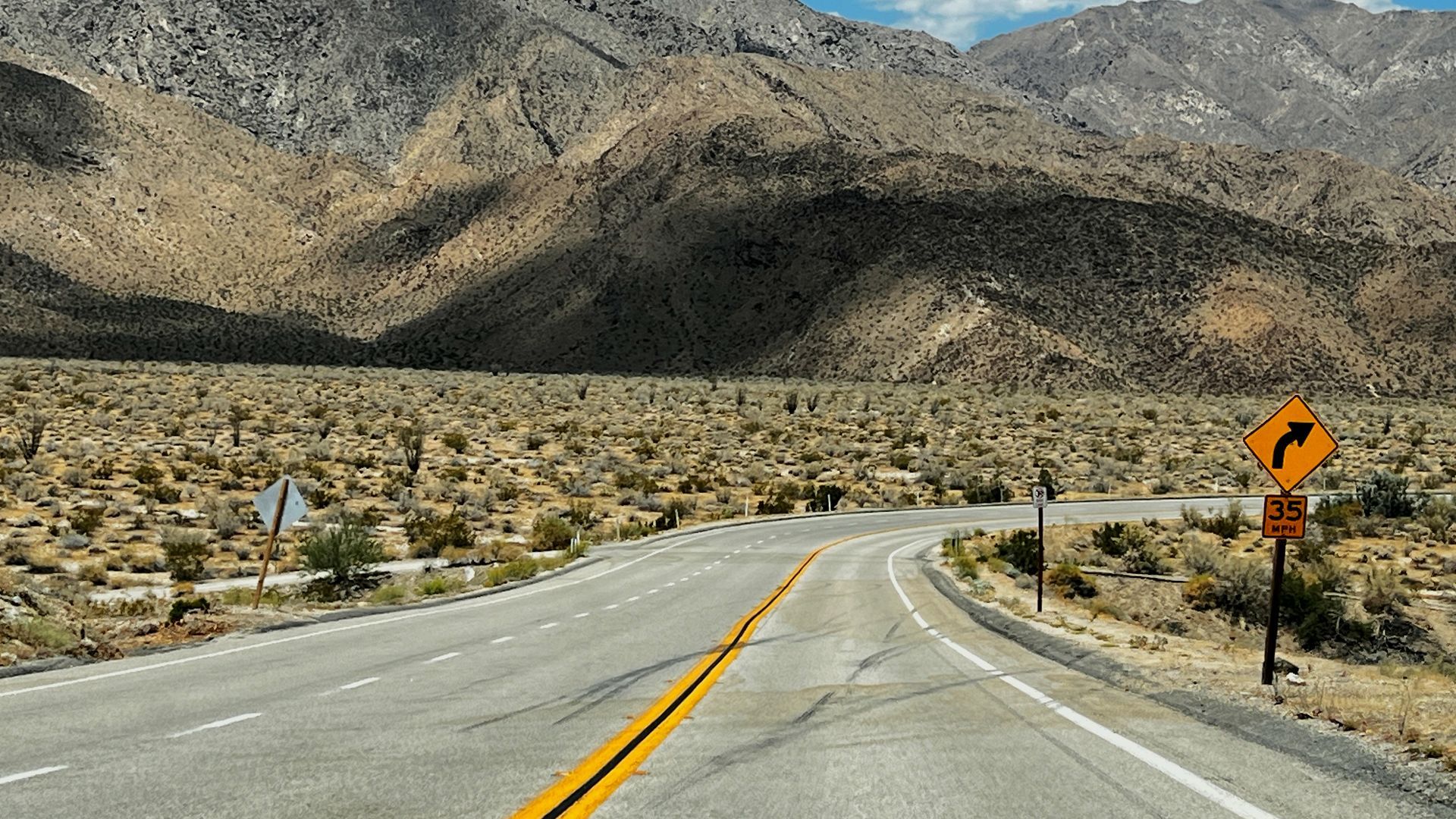
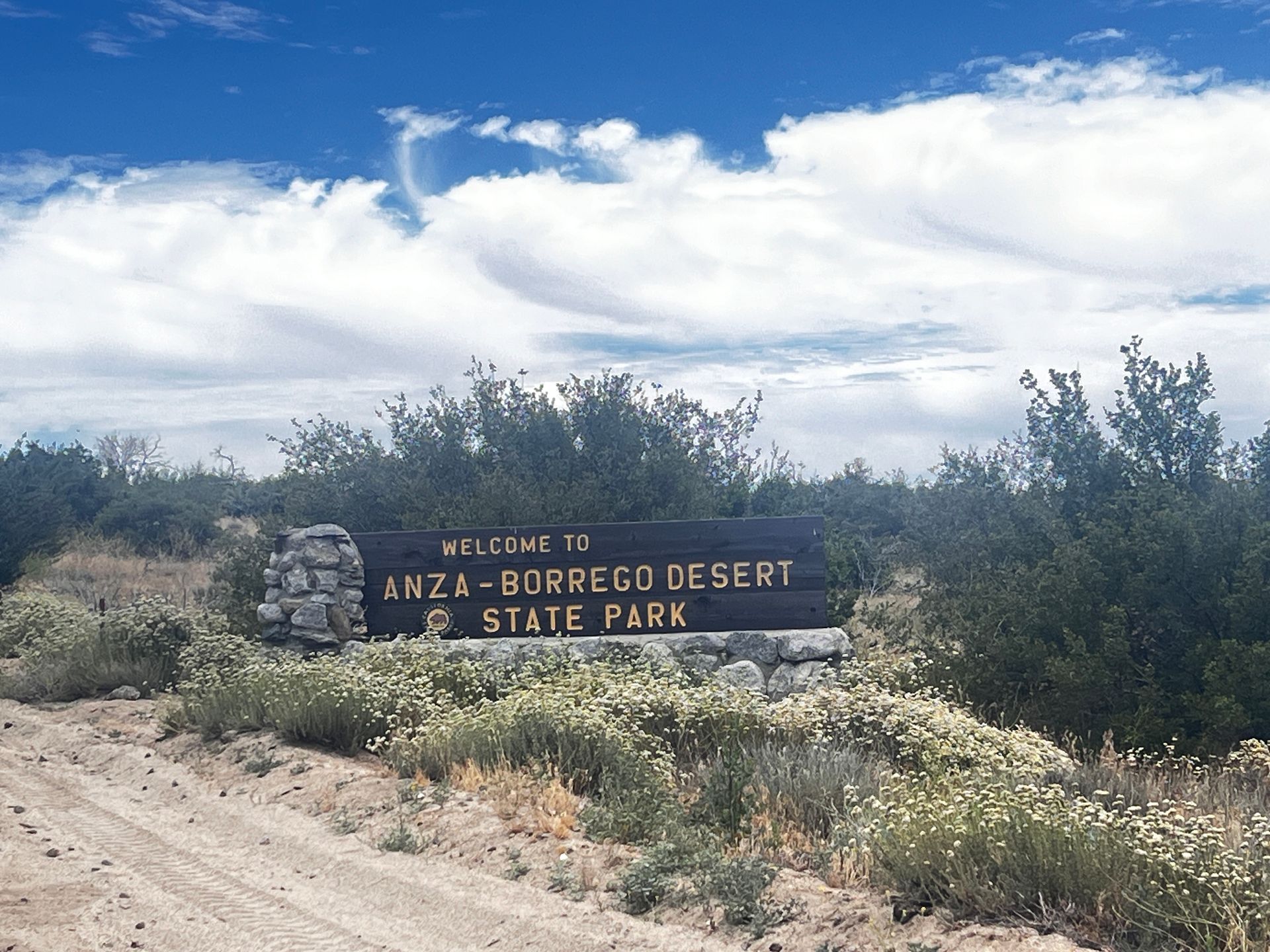
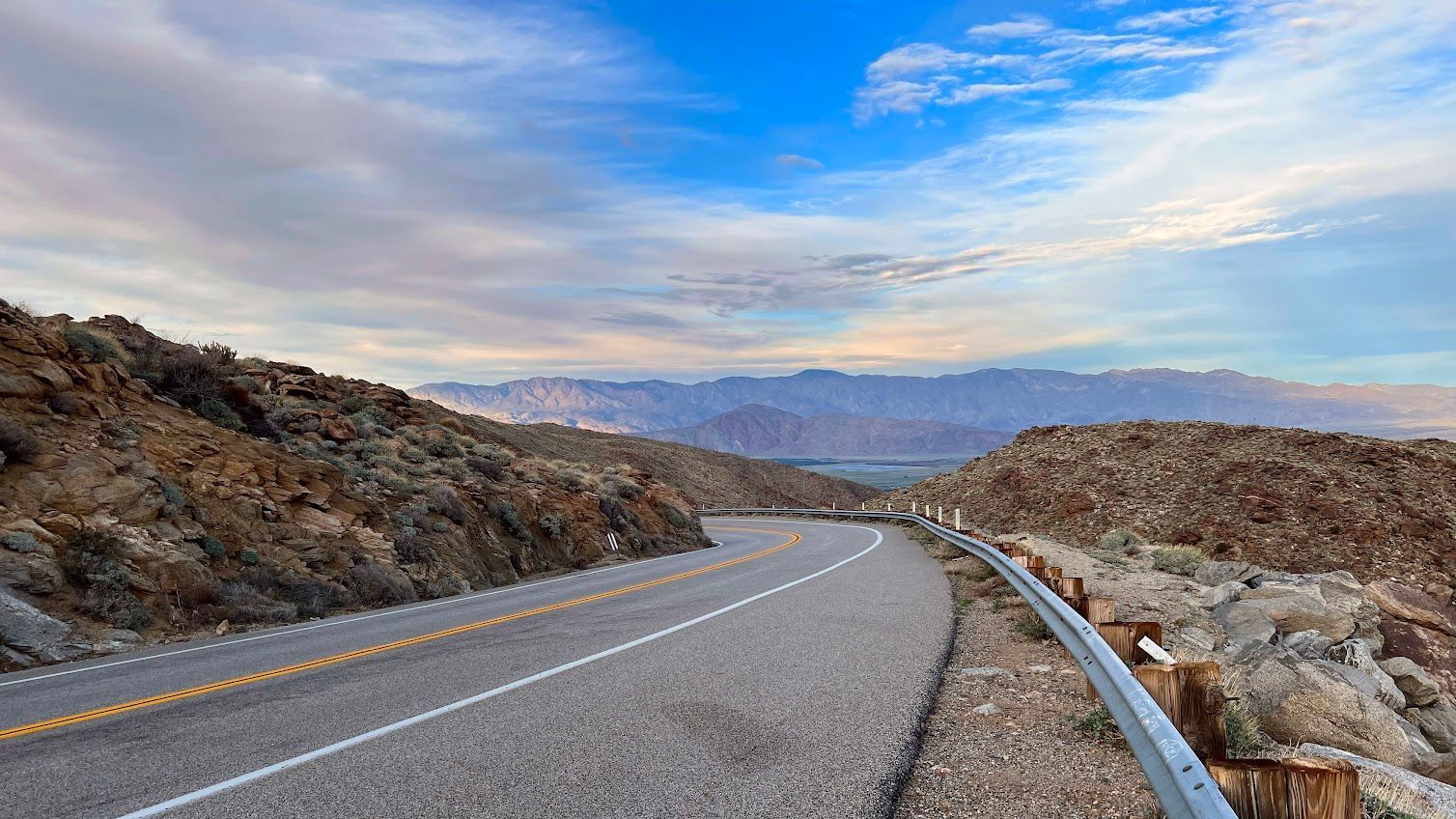
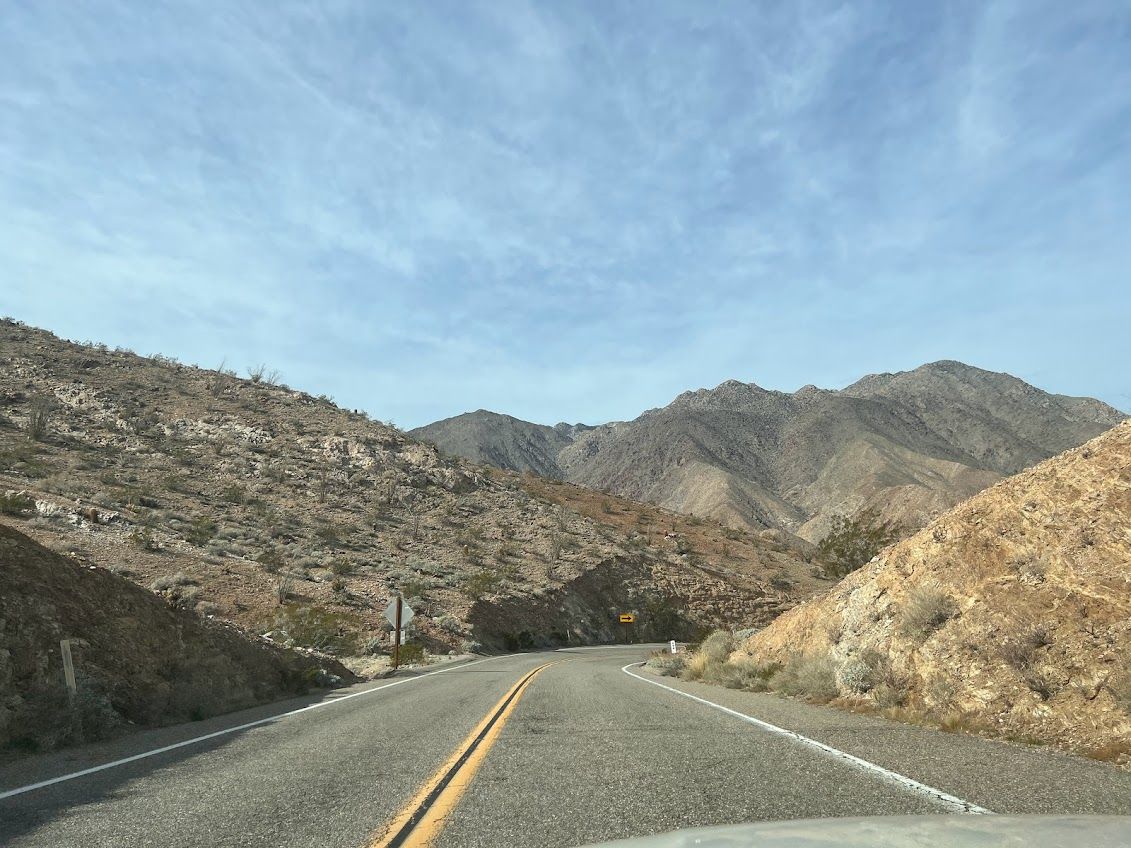
Montezuma Grade (Montezuma Valley Rd - S22), also known as the "Glass Elevator," is a scenic road in Anza-Borrego Desert State Park, San Diego County, California, starting in Borrego Springs and ascending nearly 4,000 feet over 31.6 miles.


Historical Significance


  • Original Use: The route dates back to the early 20th century, originally serving as a stagecoach route.


  • World War II: Utilized by the U.S. military for training during World War II.


Scenic Lookouts


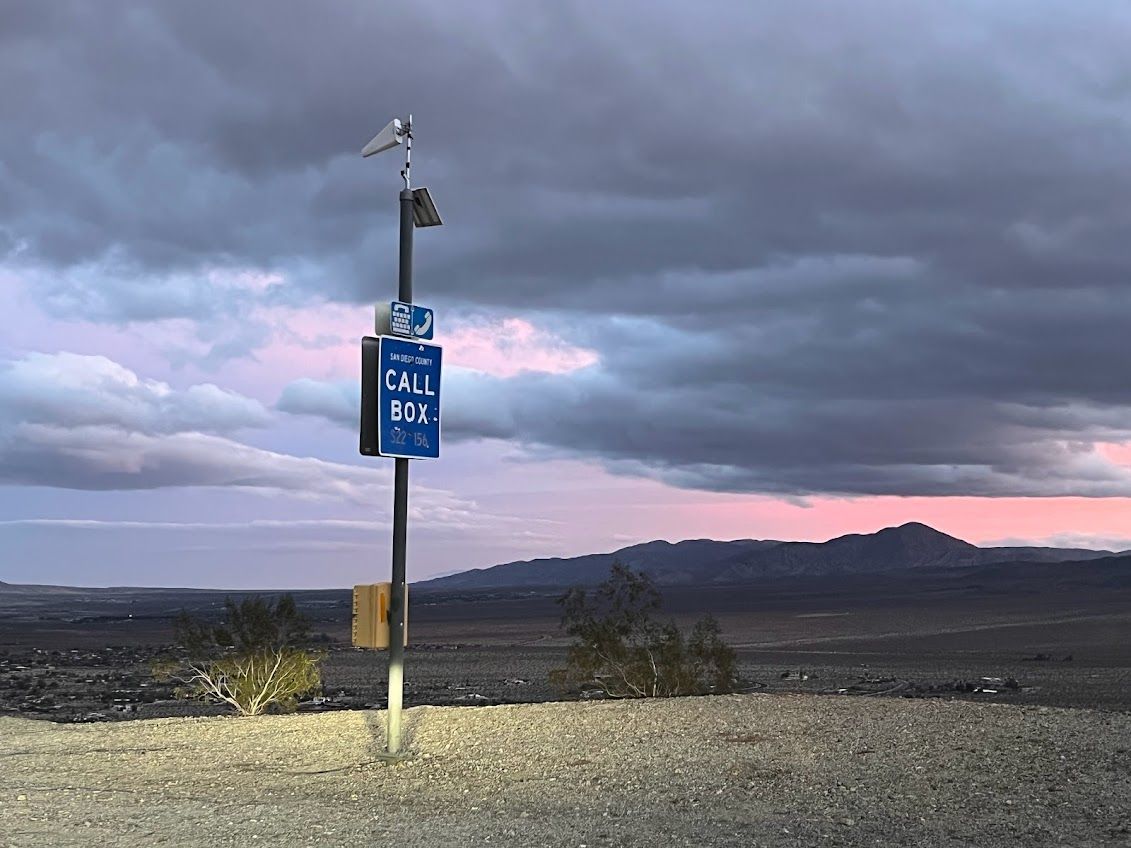
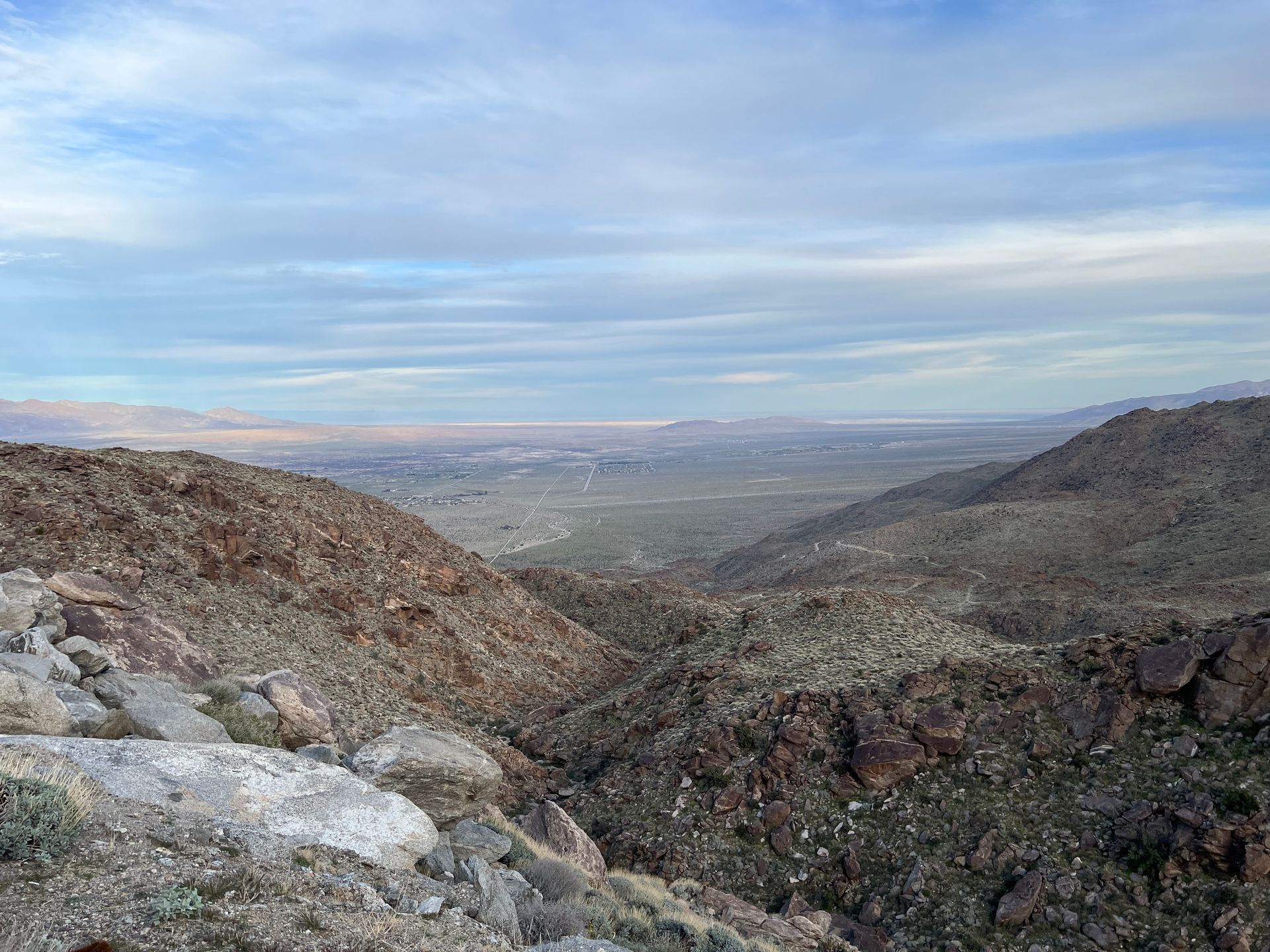
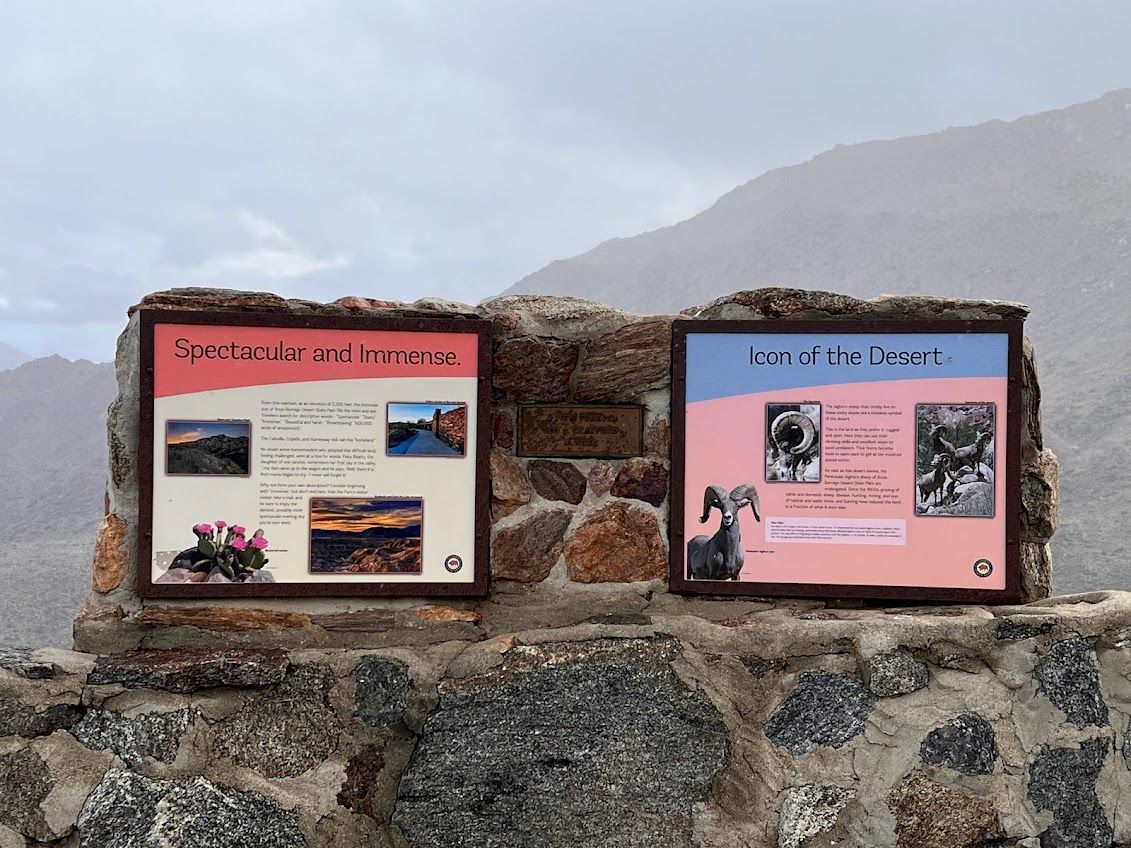
  • Montezuma Valley Road Lookout: Located at 2,300 feet, offers panoramic views of the Anza-Borrego Desert and the Salton Sea.


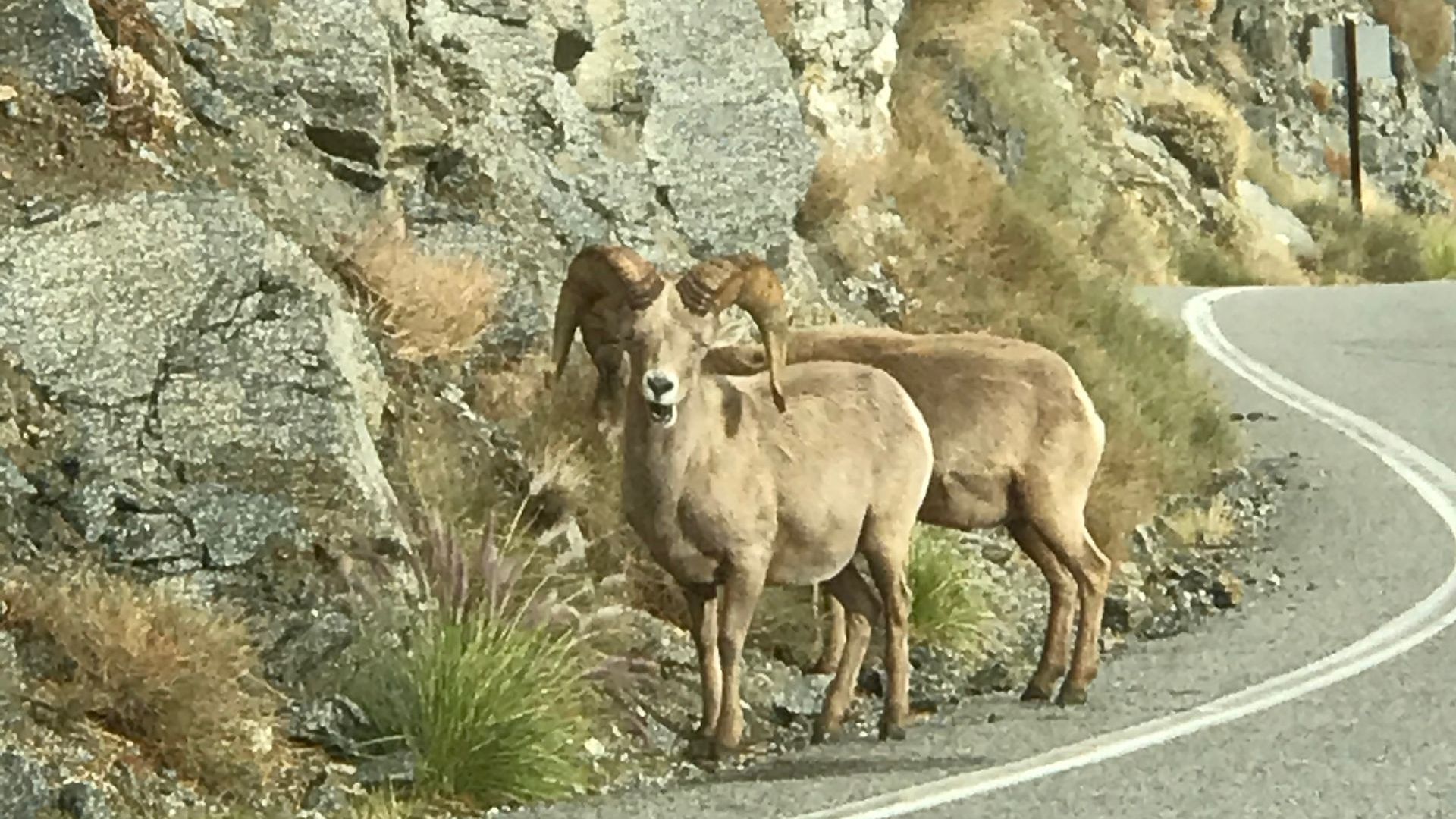
  • Wildlife: Home to wildlife like deer, rabbits, coyotes, and bighorn sheep.


The "Glass Elevator" Experience


  • Nickname Origin: The steep ascent and descent provide expansive views reminiscent of a glass elevator in a skyscraper.


  • Route Features: Includes sharp corners and blind turns.


Popular with Motorcyclists and Cyclists


  • Challenging Climb: Known for its challenging 3,300-foot climb in ten miles and thrilling descent.


  • Cycling Conditions: Cyclists enjoy minimal traffic and expansive views but must be prepared for physical demands and weather changes.


Take a glance at Montezuma Grade in Anza Borrego State Park
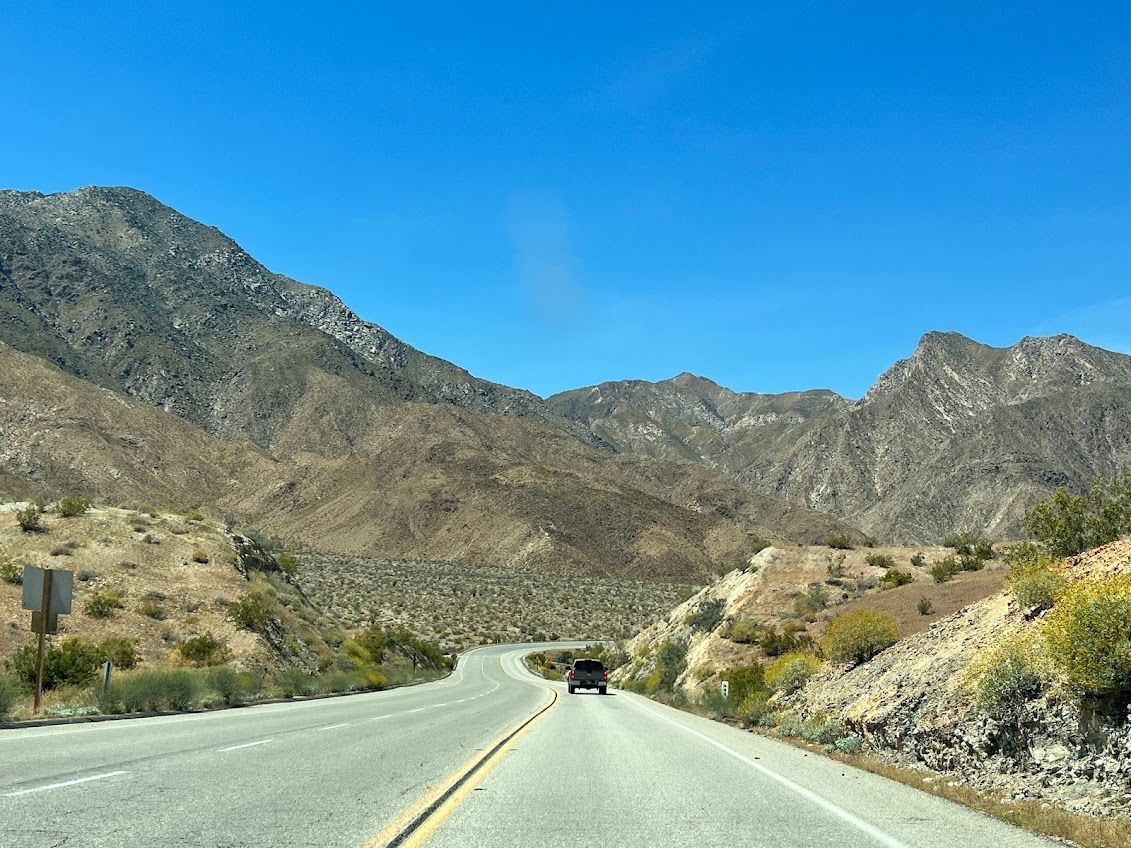
  • Montezuma Grade (The Glass Elevator) in Anza-Borrego

    Slide title

    Write your caption here
    Button
  • Montezuma Grade (The Glass Elevator) in Anza-Borrego

    Slide title

    Write your caption here
    Button
  • Montezuma Grade (The Glass Elevator) in Anza-Borrego

    Slide title

    Write your caption here
    Button
  • Montezuma Grade (The Glass Elevator) in Anza-Borrego

    Slide title

    Write your caption here
    Button
  • Montezuma Grade (The Glass Elevator) in Anza-Borrego

    Slide title

    Write your caption here
    Button
  • Montezuma Grade (The Glass Elevator) in Anza-Borrego

    Slide title

    Write your caption here
    Button
  • Montezuma Grade in Anza Borrego

    Slide title

    Write your caption here
    Button
  • Montezuma Grade in Anza Borrego

    Slide title

    Write your caption here
    Button
  • Montezuma Grade (The Glass Elevator) in Anza-Borrego

    Slide title

    Write your caption here
    Button
  • Montezuma Grade (The Glass Elevator) in Anza-Borrego

    Slide title

    Write your caption here
    Button
  • Montezuma Grade (The Glass Elevator) in Anza-Borrego

    Slide title

    Write your caption here
    Button
  • Montezuma Grade (The Glass Elevator) in Anza-Borrego

    Slide title

    Write your caption here
    Button
  • Slide title

    Write your caption here
    Button
  • Slide title

    Write your caption here
    Button
  • Montezuma Grade (The Glass Elevator) in Anza-Borrego

    Slide title

    Write your caption here
    Button
  • Montezuma Grade (The Glass Elevator) in Anza-Borrego

    Slide title

    Write your caption here
    Button
  • Montezuma Grade (The Glass Elevator) in Anza-Borrego

    Slide title

    Write your caption here
    Button
  • Slide title

    Write your caption here
    Button


Natural Beauty and Attractions


  • Notable Destinations: Passes through notable destinations in Anza-Borrego Desert State Park, including Palm Canyon and Hellhole Canyon.


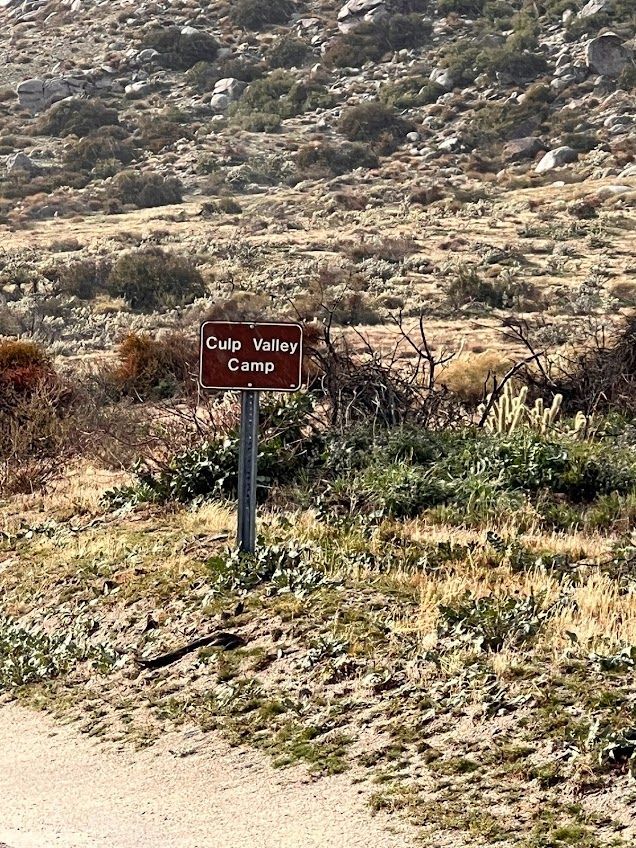
  • Culp Valley: Offers primitive camping at an elevation of over 3,000 feet, with stunning views and cooler temperatures compared to the desert floor. It’s a popular spot for hiking, including trails that connect to Hellhole Canyon and the California Riding and Hiking Trail​.


Learn more about hiking around Montezuma Grade.


2024 Film Location


Paul Thomas Anderson's new untitled film, starring Leonardo DiCaprio, Regina Hall, and Sean Penn, was partially filmed in and around Montezuma Grade. The film is set to hit theaters on August 8, 2025, bringing additional attention to this already stunning location.


Montezuma Grade: Construction and Planning


  • Montezuma Valley Road: Connects Borrego Springs to Ranchita, constructed by San Diego County’s Road Department.


  • Labor Source: Built using labor from prison camps in the backcountry during the first half of the 20th century.


  • Construction Timeline: Began in 1954 and took nearly 10 years to complete.


  • Construction Details: Supervised by foremen Ben McManama and Carl Randall with prisoners from Montezuma Honor Camp; utilized 160,000 tons of dynamite.


  • Completion: Road completion celebrated on June 24, 1964, declared a holiday by Gale Gordon. (Actor and Borrego Springs resident)


  • Early Access: Until the grade into Borrego Valley was completed, Montezuma Valley Road stopped at "Verruga," later renamed Ranchita. Anyone wanting access to the valley had to use Yaqui Pass Road.


Visit Montezuma Grade in Anza-Borrego Desert State Park


Discover Anza-Borrego Desert State Park


Located in San Diego County, California, Anza-Borrego Desert State Park offers visitors a stunning natural oasis with breathtaking scenic drives, including the renowned Montezuma Grade. Also known as the "Glass Elevator," this scenic road starts in Borrego Springs and ascends nearly 4,000 feet over 31.6 miles, providing a unique driving experience with spectacular views of rocky cliffs, canyons, and the expansive desert landscape. This picturesque location was recently featured in Paul Thomas Anderson's new film, adding to its allure.


Montezuma Grade: Scenic and Serene


Montezuma Grade is a notable route within the park, offering encounters with local wildlife such as deer, rabbits, coyotes, and bighorn sheep. Drivers are advised to navigate carefully to preserve the natural habitat and ensure safety.


Historical Significance


Montezuma Grade has a rich history, dating back to the early 20th century when it served as a stagecoach route. During World War II, the U.S. military utilized the area for training, leveraging its challenging terrain. Today, Montezuma Grade remains a vital connection between Julian and Borrego Springs, reflecting the region's historical significance. Until the grade into Borrego Valley was completed, Montezuma Valley Road stopped at "Verruga," later renamed Ranchita. Anyone wanting access to the valley had to use Yaqui Pass Road many miles away.


Montezuma Valley Road Lookout


At an elevation of 2,300 feet (701 meters), the Montezuma Valley Road lookout provides panoramic views of Anza-Borrego Desert State Park. Visitors can see the Salton Sea and enjoy spectacular sunsets. This spot is ideal for photography enthusiasts and nature lovers.


Preparation Tips


Visitors should be prepared for varying weather conditions at the lookout. High elevation can cause temperature drops, especially in the evening. It's recommended to bring water, sun protection, and a jacket.


Exploring Anza-Borrego Desert State Park


Diverse Hiking Trails


Anza-Borrego Desert State Park offers a variety of hiking trails for all skill levels, featuring landscapes such as slot canyons and palm oases. The park is also an International Dark Sky Park, making it a perfect destination for stargazing, with ranger-led programs available to enhance the experience.


Hikes Along S22 (Montezuma Valley Road)


Starting from Palm Canyon and continuing up to the end of S22, this route includes some of the park's most popular destinations, such as Palm Canyon and Hellhole Canyon. The Montezuma Grade winds up to Culp Valley and ends just beyond Ranchita.


Culp Valley


Culp Valley offers primitive camping at an elevation of over 3,000 feet, providing stunning views and cooler temperatures compared to the desert floor. This area is a popular spot for hiking, with trails connecting to Hellhole Canyon and the California Riding and Hiking Trail. Despite being affected by a fire in 2012, the area is slowly regenerating, especially around springs.


Key Hiking Destinations


  • Palm Canyon: One of the most popular spots in the park.
  • Hellhole Canyon: A challenging hike leading to a beautiful waterfall.
  • Culp Valley: Includes multiple springs such as Barrel Spring, Big Spring, and Pena Spring.
  • California Riding and Hiking Trail: Offers extensive hiking opportunities.
  • Other Notable Trails: Buck Canyon, Chief Rain In The Face, Chimney Rock, Dry Canyon, Eagle Rock, Indian Head, Jasper Trail, Little Surprise Canyon, Middle Spring, Montezuma Mine, Pinyon Spring, The Slab, Thimble Peak, Tubb Canyon, Wilson Trail, and Ysidrio Peak.


Learn More About Hiking Near Montezuma Grade


With its diverse landscapes and rich history, Anza-Borrego Desert State Park provides an unforgettable outdoor experience for visitors.


Lodging in Borrego Springs


Several lodging options are available in Borrego Springs for visitors seeking a comfortable stay:


  • Palm Canyon Hotel & RV Resort: Offers scenic views and comfortable accommodations.
  • La Casa Del Zorro Resort & Spa: A luxury resort with gardens, spa treatments, and elegant rooms.
  • Borrego Springs Resort: Ideal for a luxury getaway with top-notch amenities.
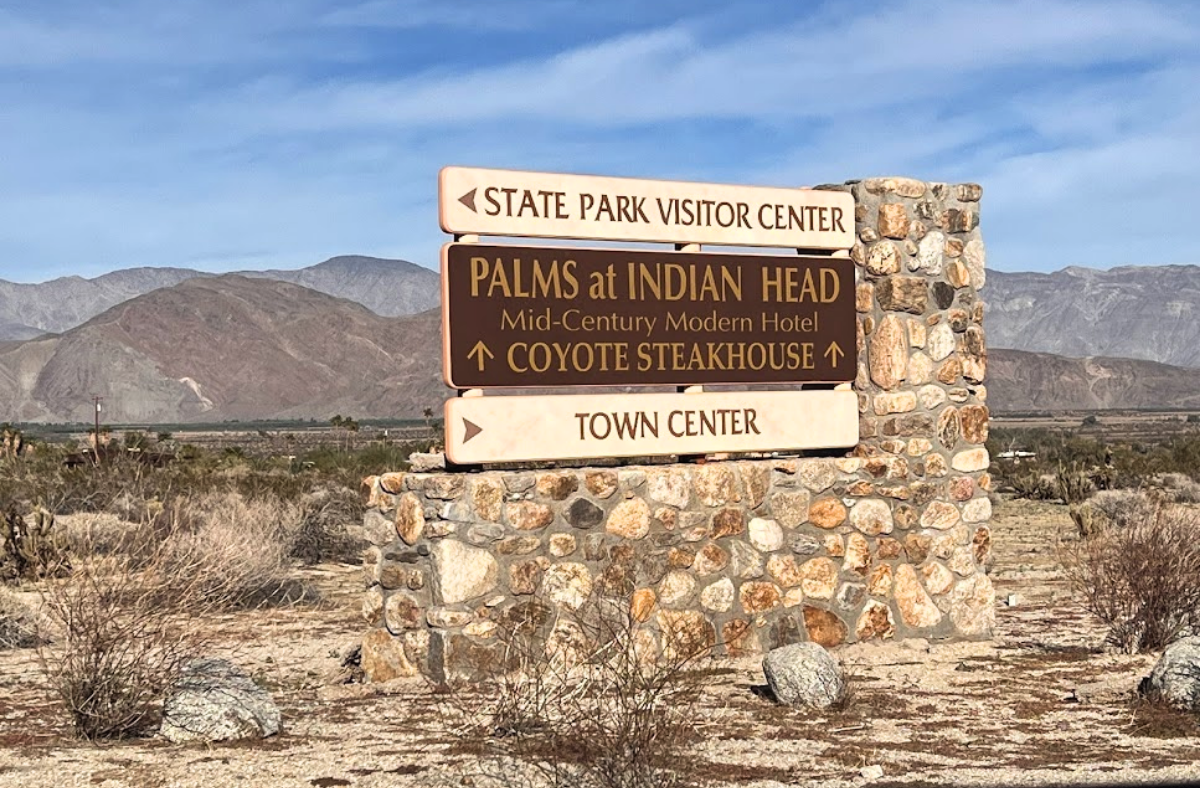
  • Palms At Indian Head: A budget-friendly hotel with a peaceful setting.
  • Stanlunds Inn & Suites: Affordable and cozy rooms.


Here are more lodging options in Borrego Springs


Directions to Montezuma Grade


  • From San Diego: Take I-8 East, exit on State Route 79 North, continue to State Route 78 East, and follow signs to Anza-Borrego Desert State Park.


  • From Temecula: Take I-15 South, exit on State Route 79 South, continue to State Route 371 East, then to State Route 78 East, and follow signs to the park.


Maps and Guides


For a comprehensive exploration, downloadable maps and guides are available, including the Anza Borrego State Park Map, Palm Canyon Map, Coyote Canyon Map, and a Guide Map for Popular Hikes. These resources can enhance your visit by helping you discover the park’s many hidden gems.


Anza-Borrego Desert Region: Your Complete Guide to the State Park and Adjacent Areas of the Western Colorado Desert Paperback

Learn More About Borrego Springs

By Andrea McKenna June 27, 2026
Heatwave Pool Party Returns for an Evening of Music, Swimming, and Summer Fun Looking for a unique way to celebrate Independence Day in Borrego Springs? The Palms at Indian Head is hosting its annual Heatwave Pool Party on Saturday, July 4, from 6:00 to 9:00 p.m. , inviting guests to enjoy an evening of swimming, music, and poolside fun at one of the community's most iconic destinations. Known for its mid-century modern architecture and rich Hollywood history, The Palms at Indian Head has welcomed visitors to Borrego Springs for decades. Today, the boutique hotel continues to blend its historic charm with new experiences, including the recently opened Dive Bar, the award-winning Coyote Steakhouse, and special community events throughout the year. This year's adults-only celebration encourages guests to bring a swimsuit and towel and enjoy the Olympic-size pool under the desert evening sky. A no-host bar will be available, while Coyote Steakhouse will be serving food and beverages throughout the event. Outside food, drinks, and coolers are not permitted. The Heatwave Pool Party takes place at The Palms at Indian Head, 2220 Hoberg Road, Borrego Springs. For more information or to RSVP, call 760-767-7788.
By Dennis Mammana June 27, 2026
By Dennis Mammana Week of June 28 - July 4, 2026 It was bound to happen: The heat of summer has arrived at my desert home. As I write these words, it's 115 F outside, and it's just the beginning of the blistering heat we'll experience for months. This is no surprise, of course. We're all quite familiar with this seasonal pattern; in fact, most of us learned in grade school about the seasons and what causes them, but you'd be surprised how little some people remember of those basic lessons. I was stunned when I first heard of a 1987 video in which filmmakers Matthew H. Schneps and Philip Sadler of the Harvard-Smithsonian Center for Astrophysics interviewed recent Harvard University graduates, faculty members and alumni — some with science backgrounds — and asked them a simple question: What causes our seasons? Twenty-one of the 23 people interviewed did not know the answer. This is Harvard, people. Harvard! If you can't believe it, watch it online here. Oh, sure, they offered elaborate explanations and tried to be convincing, but it's obvious they had no clue. The most common reason they cited for the summertime heat was that the Earth lies closest to the sun at that time of year, and the cold of winter is caused by our greater distance from the sun. Sounds perfectly reasonable, doesn't it? But it's wrong. So very wrong. Now it is true that our planet orbits the sun not in a circular path but in an elliptical path, and that our distance from the sun varies throughout the year, but only by about 3%. What seems counterintuitive, however, is that we're closest to the sun not during our Northern Hemisphere summer but during our winter! In 2026, the Earth will reach its farthest point from the sun ("aphelion") on July 6, when we will lie 94,502,961 miles from our star. This occurs during the Northern Hemisphere summer. The Earth's nearest point ("perihelion") won't arrive until Jan. 2, 2027 (during our winter), when we'll be 91,406,556 miles from the sun. Of course, if you happen to live in the Southern Hemisphere, where seasons are reversed from those north of the equator, our planet's perihelion does occur during their summertime. But that's a story for another time. So, if our distance from the sun doesn't cause seasonal temperature changes throughout the year, what does? Well, as we all learned in third grade, it's the tilt of the Earth's axis. Our planet is tipped about 23.4 degrees to the plane of its orbit around the sun. From mid-March to mid-September, the Earth's Northern Hemisphere is tilted toward the sun, allowing solar rays to beat directly down upon us. During these longer days, heat accumulates in our atmosphere while having little time to escape into space during the much shorter nights. In other words, it's not our changing distance from the sun that causes the buildup of summer heat; it's the tilt of our planet that produces long days and short nights — just as it always has. Unfortunately, few still seem to understand this simple phenomenon, and I suspect if we did this same interview today, we'd see even less informed answers than four decades ago! Visit Dennis Mammana at dennismammana.com. To read features by other Creators Syndicate writers and cartoonists, visit the Creators Syndicate website at www.creators.com . Learn More About Borrego Springs
By Miriam Raftery June 27, 2026
By Miriam Raftery - www.eastcountymagazine.org June 26, 2026 (San Diego’s East County)— The Society of Professional Journalists’ San Diego Chapter last night presented four Excellence in Journalism awards to ECM editor Miriam Raftery and associate editor Karen Pearlman. The awards honored ECM’s coverage of issues involving the El Capitan Dam in Lakeside, aerial firefighting readiness, the impacts of mass deportations, and our guide to travel in San Diego County’s desert regions. Raftery received a first place award for an audio feature titled “ Who will be there when they come for you ?” Hear the interview with immigration attorney Nora Milner, which aired on East County Magazine’s radio show on KNSJ. You can also read a summary of that interview by Alex Schorr. In the interview, Milner voiced alarm over blatant denials of due process for immigrants under the Trump administration, warned that even citizens are not safe, and offered tips for those concerned about being visited by ICE or detained for potential deportation. Pearlman took second place for investigative/enterprise story in the daily reporting category for “ Proposed Lakeside sand mine owner sues city of San Diego for damages from water release at El Capitan Dam .” Her investigative reporting detailed the dangerous conditions of the old earthen dam and the potentially catastrophic loss of life if it were to rupture. He report spotlighted how the city’s failure to repair or rebuild the dam necessitated releasing water which raised the water table, resulting in a downstream property owner suing the city for destroying the site’s sand-mining potential. Third place for investigative/enterprise reporting went to Raftery for her article, “ Does the San Diego region have adequate aerial firefighting capability for the coming season? ” Raftery initiated the investigative report after learning that Cal Fire’s Ramona air base would be closed for nearly a year and that an SDG&E air crane on which fire authorities had relied for aerial firefighting support was no longer available to the manufacturer declining to renew the lease. Pearlman and Raftery shared a third place award for travel writing for their comprehensive piece titled “ Our Guide to San Diego’s desert destinations .” The article was written as part of a series of regional guides for East County Magazine’s newly launched “ Visit East County ” section highlighting travel and tourism destinations in San Diego’s inland region.
By Christmas Circle Board of Directors June 26, 2026
Written bids are due July 20 for ongoing landscape maintenance services beginning Aug. 1, 2026.
By Mia Garcia: Borrego Sun Youth Intern June 26, 2026
Borrego Sun youth intern Mia Garcia shares a poem about courage and her first live performance.
By San Diego County June 26, 2026
FY 26/27 application and instructions will be available on July 1, 2026.
By Andrea McKenna June 25, 2026
The Emmy Award-winning host called the sculptures "the most remarkable metal sculptures to be found anywhere in the world."
By Borrego Springs Soroptimist June 24, 2026
Circle of Art Continues a Tradition of Art and Giving in Borrego Springs
By Kathy Dice, Borrego Springs Soroptimist Club President June 24, 2026
Soroptimist International of Borrego Springs representatives Sally Theriault, Scholarship Committee Chair, and Jenny Huntley, Treasurer, present scholarships to Borrego Springs High School graduating seniors during Awards Night.
By Andrea McKenna June 24, 2026
Reserve a guided night sky tour with astronomer Dennis Mammana
By Eric Jones, East County Performing Arts June 23, 2026
Classic musical offers six performances at Julian High School's Little Theater
By Andrea McKenna June 23, 2026
California Newspaper Publishers Association Merit Awards presented to the Borrego Sun for Best Front Page in 1966 and 1967.
By Andrea McKenna June 22, 2026
Diane Johnson thanks guests and shares upcoming events during Borrego Art Institute’s Summer Solstice gathering.
June 22, 2026
Renowned plein air artist Geoff Allen found inspiration in one of Borrego Springs’ most iconic locations: The Palms at Indian Head pool.
June 21, 2026
Prepared with information from ABDNHA's Dark Sky resources, Michael Poirier, Astrophotographer, and the Sky Calendar from Michigan State University. Learn more about Borrego Springs dark skies at: https://abdnha.org/darksky/sky / Note: You can subscribe to the Sky Calendar from Abrams Planetarium, Michigan State University, 755 Science Rd, East Lansing, MI 48824. Borrego Springs offers some of the darkest skies in Southern California, making summer an excellent time to observe the Milky Way, planets, meteor showers, and other celestial events. Here's what to look for in June and July 2026. Early June Sunrise: 5:38 a.m. Sunset: 7:50 p.m. PST Day Length: 14 hours 12 minutes June Highlights June 1 (Monday) Venus and Jupiter appear within 8° of each other in the west-northwestern sky after sunset. June 3–16 Milky Way viewing conditions are excellent, with dark, moonless skies after nightfall. The Milky Way rises at 10:57 p.m. on June 7 and as early as 10:30 p.m. on June 14. It remains visible for up to 4 hours and 29 minutes. June 6–13 Grand Canyon Star Party, Arizona. Learn more at www.grandcanyon.org . June 11 (Thursday) Venus, Jupiter, and Mercury span their shortest angle in the evening sky, just 13.2° apart. June 15 (Monday) New Moon — one of the darkest nights of the month for stargazing and astrophotography. June 15 (Monday) Mercury reaches greatest elongation, 24.5° from the Sun, making it the best evening appearance of the year shortly after sunset. June 21 (Sunday) June Solstice marks the beginning of summer in the Northern Hemisphere. It is the longest day of the year with 14 hours and 20 minutes of daylight. June 22–July 2 June Bootids Meteor Shower. June 29 (Monday) Full Moon rises at 8:17 p.m. and sets at 5:04 a.m. June 30 (Tuesday) Asteroid Day. Early July Sunrise: 5:41 a.m. Sunset: 7:59 p.m. Day Length: 14 hours 18 minutes July Highlights July 5 (Sunday) The Milky Way rises at 9:38 p.m. and remains visible for 3 hours and 58 minutes. July 12 (Sunday) The Milky Way rises at 9:34 p.m. and remains visible for 3 hours and 35 minutes. July 14 (Tuesday) New Moon — ideal conditions for stargazing and astrophotography. July 15 (Wednesday) Mercury reaches greatest elongation, 24.5° from the Sun. July 28–29 (Tuesday–Wednesday) Delta Aquariids Meteor Shower peaks. July 29 (Wednesday) Full Moon rises at 8:17 p.m. and sets at 5:04 a.m. The Planets and the Milky Way in June Evening Planets Venus and Jupiter dominate the western sky after sunset throughout June. Around June 8–9, the two planets appear in conjunction, creating a striking close encounter in the west-northwestern sky. Venus, often called the "Evening Star," shines brilliantly as it moves from Taurus toward Gemini and climbs higher in the evening sky each night. Jupiter remains nearby and is also easily visible. Mercury becomes visible low in the western sky during the second half of June. June 15 offers the best viewing opportunity, as Mercury reaches its greatest elongation and highest apparent position above the horizon. Morning Planets Saturn and Mars are visible before sunrise. Mars remains low in the east-northeast, while Saturn rises higher from the east to east-southeast. Early June provides a chance to see the two planets relatively close together. Summer Milky Way Summer is the prime season for viewing the bright central core of the Milky Way. From June through August, the galaxy's core rises in the southeastern sky and becomes one of the most spectacular sights available to dark-sky observers. June Bootids Meteor Shower The June Bootids occur annually from June 22 through July 2 and peak around June 27. Most years produce only one or two meteors per hour. However, this shower has occasionally surprised observers with dramatic outbursts. In 1998, rates briefly reached approximately 100 meteors per hour. The shower originates from debris left by Comet Pons-Winnecke, which orbits the Sun every 6.3 years. June Bootids are known for their unusually slow speed, entering Earth's atmosphere at approximately 14 kilometers per second. Asteroid Day – June 30 Asteroid Day is a United Nations-sanctioned global awareness campaign held annually on June 30. The event educates the public about asteroid impacts, planetary defense, and ongoing research into near-Earth objects. The date commemorates the Tunguska Event of June 30, 1908, when a massive airburst explosion flattened approximately 830 square miles of Siberian forest. The blast is estimated to have released energy equivalent to between 3 and 50 megatons of TNT, making it the largest recorded impact event in modern history. For more information, visit www.un.org. Delta Aquariids Meteor Shower The Delta Aquariids meteor shower peaks on the night of July 28 and the morning of July 29. This annual shower can produce up to 20 meteors per hour under ideal conditions and is associated with debris from Comets Marsden and Kracht. The shower runs from July 12 through August 23 each year. Unfortunately, the 2026 peak coincides with a Full Moon, which will wash out many fainter meteors. Patient observers may still catch some of the brighter meteors throughout the night. The meteors appear to radiate from the constellation Aquarius but can be seen anywhere in the sky. Learn More About Borrego Springs' Dark Skies Borrego Springs is California's first International Dark Sky Community and one of the best places in Southern California to experience the Milky Way, meteor showers, planets, and other celestial events. To learn where to observe, dark sky etiquette, upcoming programs, and more about stargazing in Borrego Springs, visit the Anza-Borrego Desert Natural History Association's Dark Sky resources: https://abdnha.org/darksky/sky/


By Matt Bosson BSFI June 20, 2026
Free Summer Movies Continue in Borrego Springs This July


Show More

Share This Post