Anza Borrego State Park
Borrego Springs is the Gateway to Anza-Borrego Desert State Park
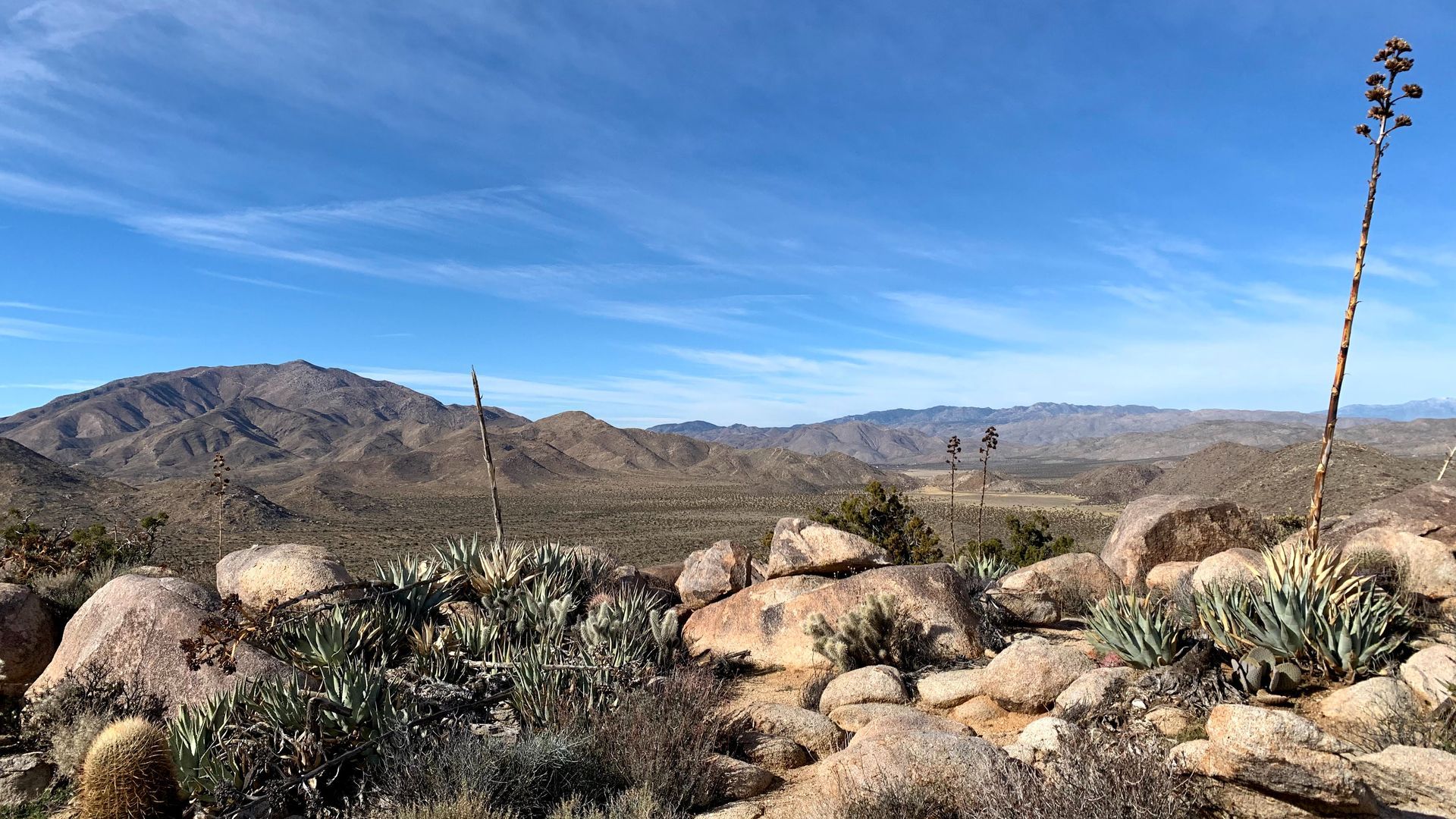
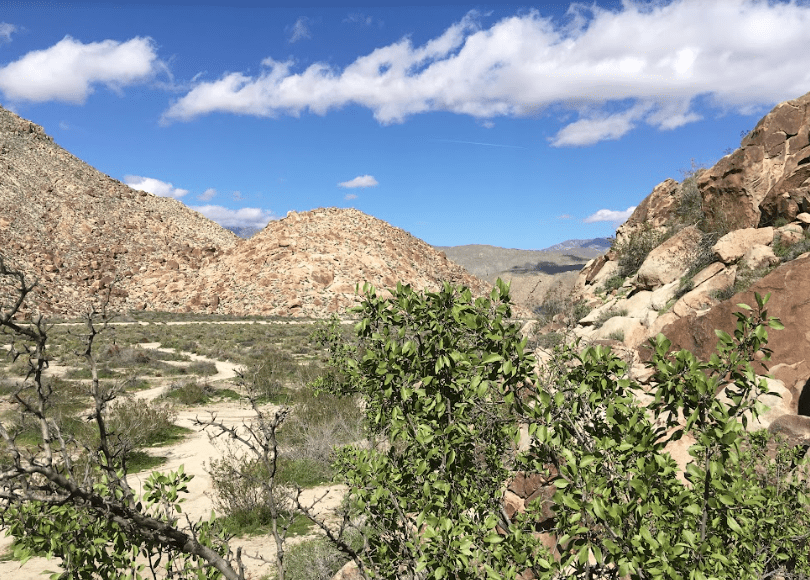
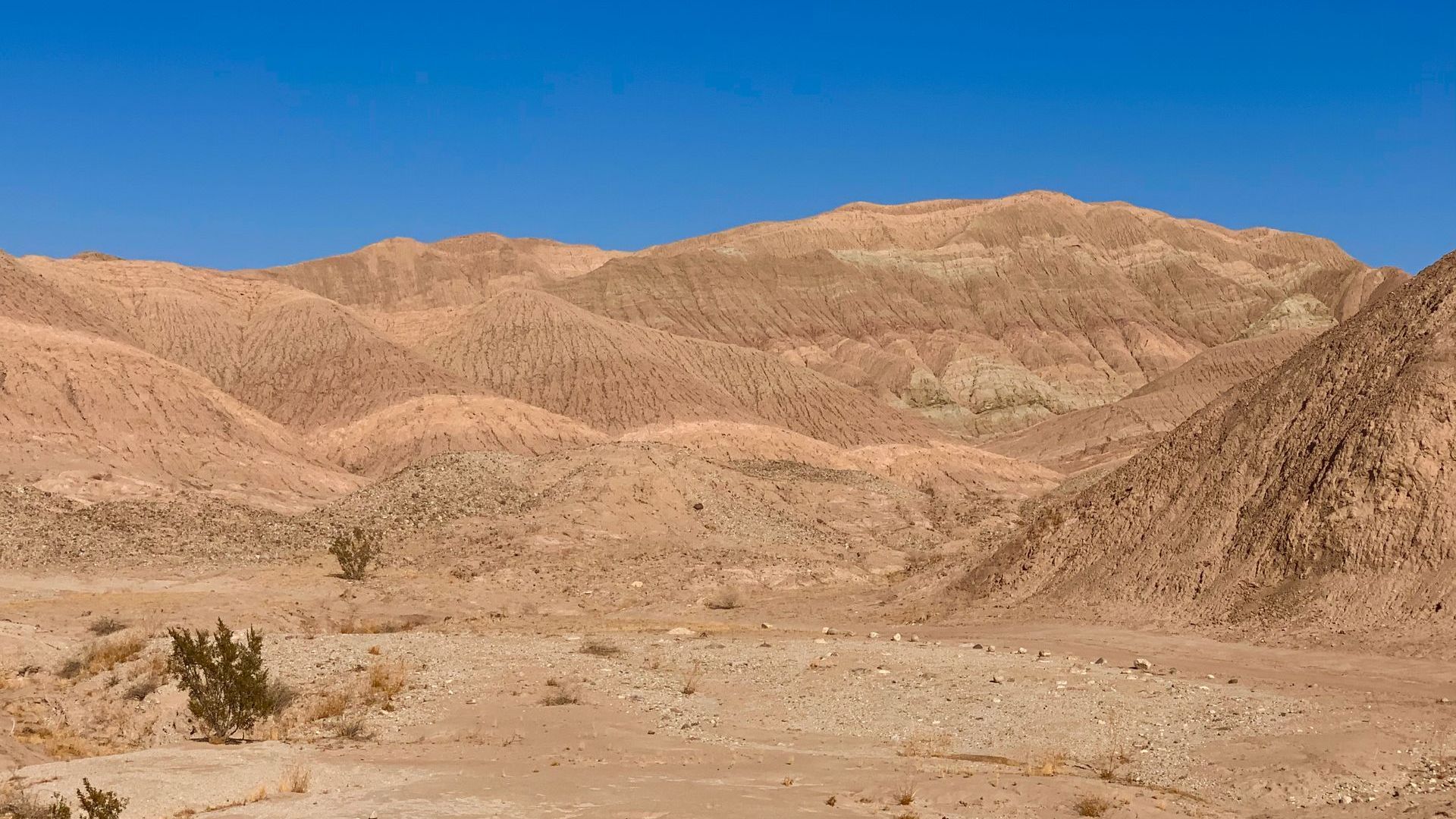
Anza-Borrego Desert State Park is the largest state park in California and the third largest in the United States, protecting more than 600,000 acres — roughly 1,000 square miles — of badlands, palm oases, slot canyons and cactus-studded mountains across San Diego, Riverside and Imperial counties. The town of Borrego Springs sits entirely surrounded by it.
The park takes its name from Juan Bautista de Anza, the Spanish explorer whose 1774–1776 expeditions crossed this desert to open an overland route between Mexico and California, and from borrego , the Spanish word for bighorn sheep. California acquired the first parcel of land in November 1932 and formally designated the park in 1933, originally as Borrego Palms Desert State Park. It was named a National Natural Landmark in 1974.
Quick facts
- Size
- More than 600,000 acres (about 1,000 square miles)
- Established
- First land acquired 1932; formally designated 1933
- Counties
- San Diego, Riverside, Imperial
- Ecosystem
- Colorado Desert, part of the larger Sonoran Desert
- Elevation
- Roughly 150 feet to about 6,200 feet
- Trails
- About 110 miles of hiking trails
- Dirt roads
- About 500 miles
- Wilderness
- 12 designated wilderness areas
- Native plants
- About 600 species
- Day use fee
- $10 per vehicle
- Park hours
- Open 24 hours, year-round
- Dark sky status
- International Dark Sky Park (2018, Silver tier)
Wildflower season
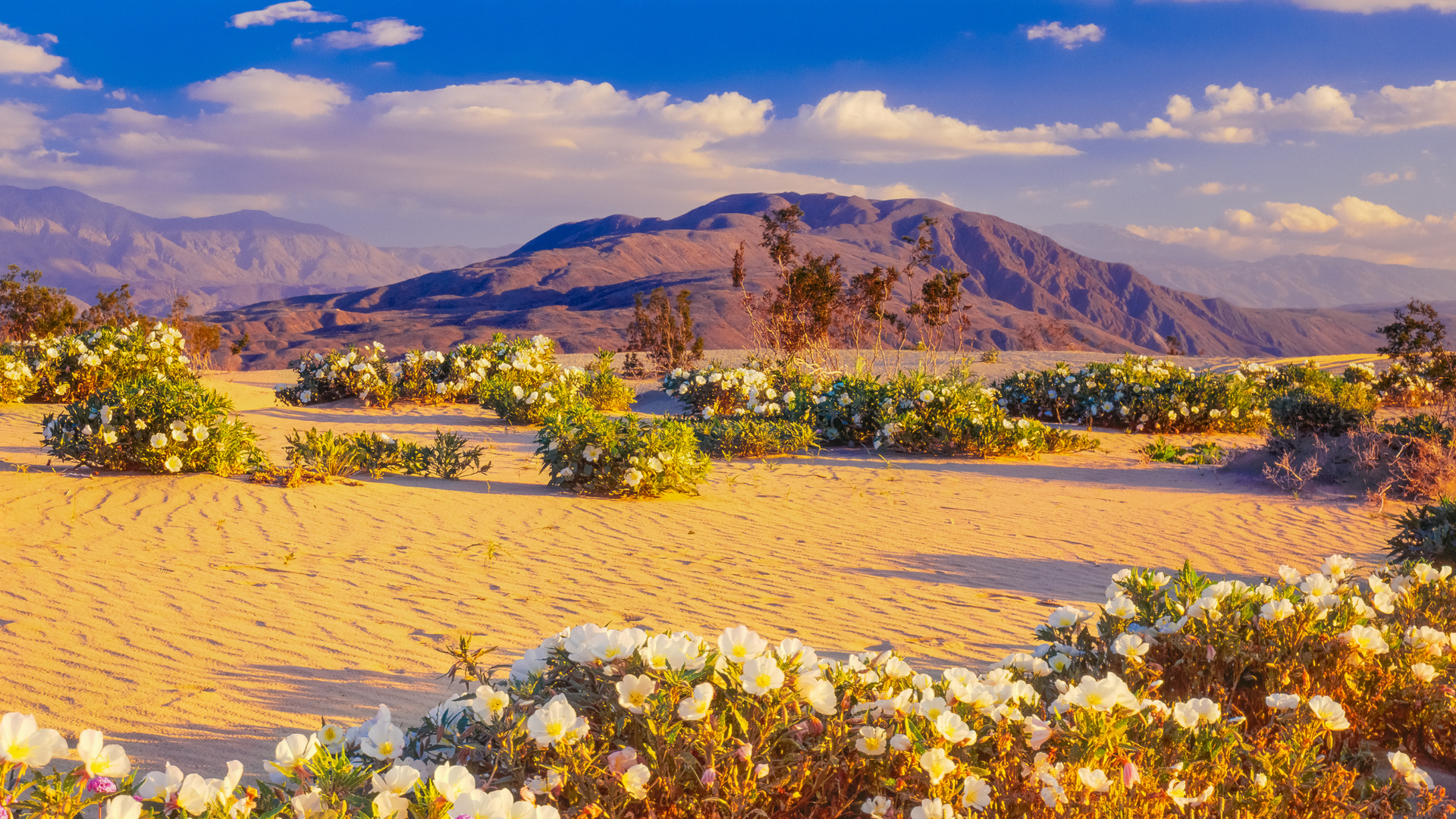
The desert's annual wildflower bloom is what draws the biggest crowds. Annuals can begin appearing as early as January and continue through mid-April, with peak color most often falling between late February and early April. Timing shifts every year — it depends on autumn and winter rainfall, and on whether temperatures and wind cooperate in the weeks before bloom.
In an exceptional year, a "superbloom" transforms the valley floor. During those seasons Borrego Springs, a town of roughly 3,400 year-round residents, has hosted crowds approaching 200,000 visitors. Book lodging early, arrive on a weekday if you can, and check current bloom reports before you drive out — a bloom that peaked last week may already be gone.
Beyond the annuals, ocotillo, beavertail and cholla cactus, and desert lavender put on their own show along canyon trails in spring.
Stargazing and dark skies
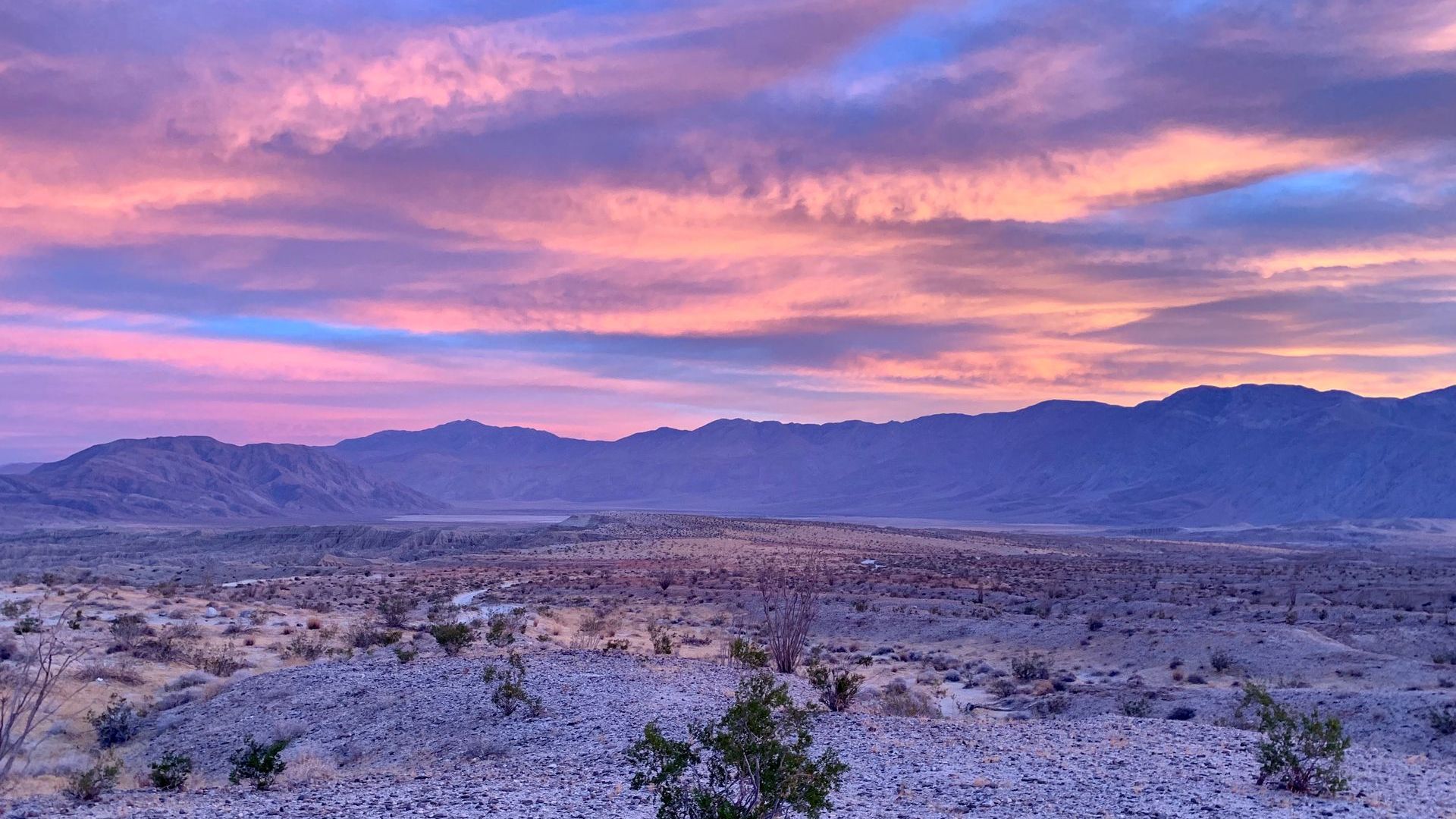
Anza-Borrego was designated an International Dark Sky Park in 2018, at Silver tier — recognition of genuinely dark skies across most of the park, with only small domes of glow near the horizon from distant Los Angeles, San Diego, Palm Springs and El Centro. Borrego Springs itself earned International Dark Sky Community status back in 2009, the first community in California to do so and, at the time, only the second in the world.
That pairing is unusual: the town at the center of the park has its own lighting ordinances, so the most significant potential source of light pollution in the area is actively managed. The practical result is a night sky you can see the Milky Way in from a paved pullout, no backcountry hike required. New moon nights between October and April offer the best combination of dark skies and comfortable overnight temperatures.
Things to do
Hiking
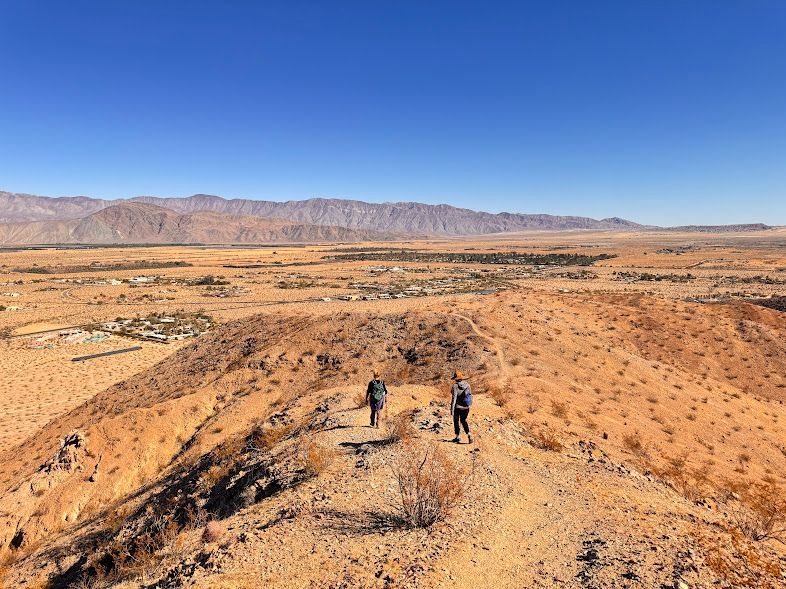
The Borrego Palm Canyon Trail, about three miles round trip from the trailhead near the Visitor Center, is the park's signature hike and the reason the park was created — it leads toward a native palm oasis tucked into the canyon. Trail conditions and access points change after fires and floods, so check current status before you go. Elsewhere, canyons in the southern reaches of the park hold additional palm groves and far fewer people.
Slot canyons
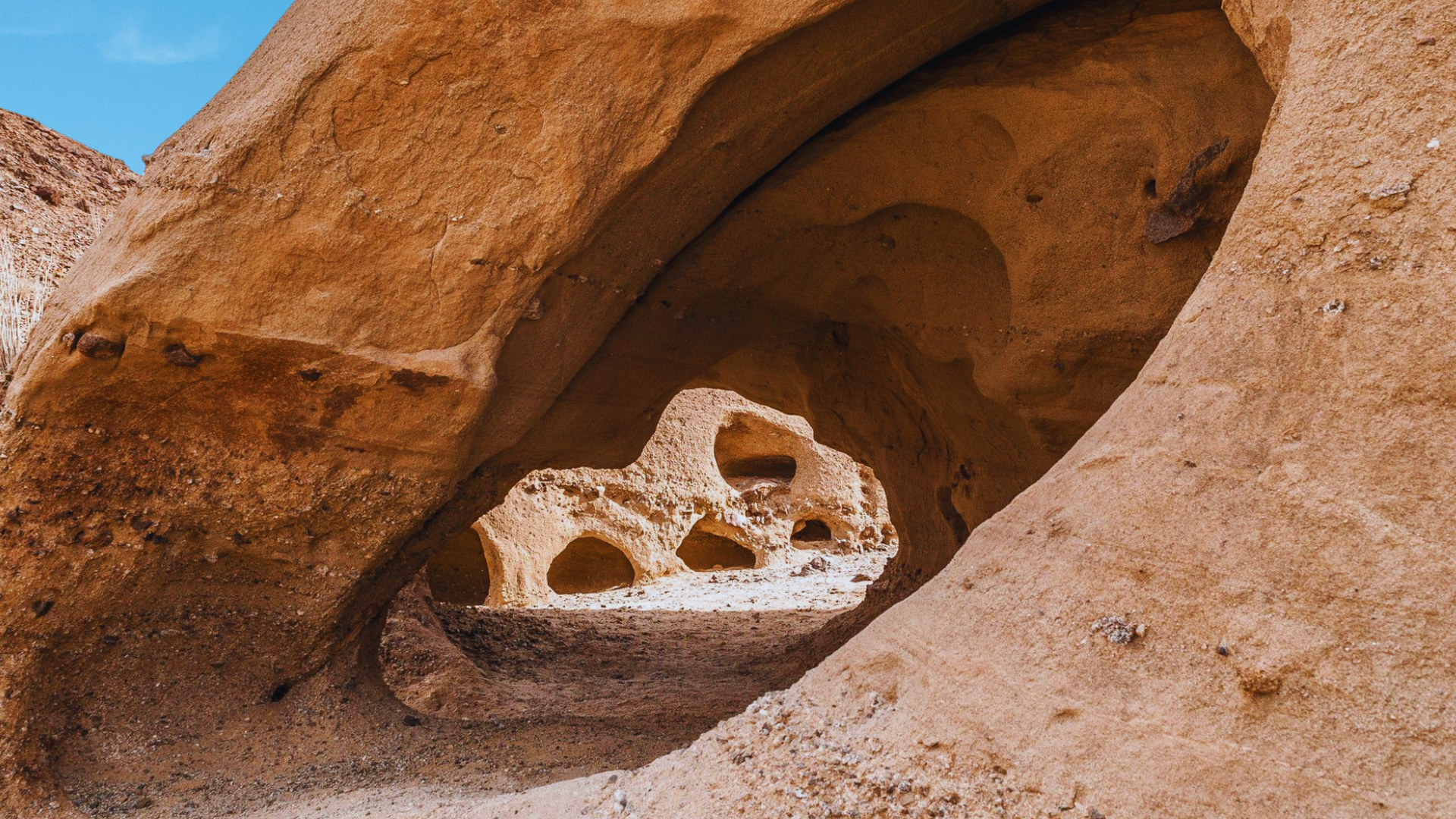
The Slot, in the Buttes Pass area, is a narrow sandstone corridor that squeezes down to shoulder width in places. It's short, dramatic and extremely popular. A day use fee is collected here.
Badlands and overlooks
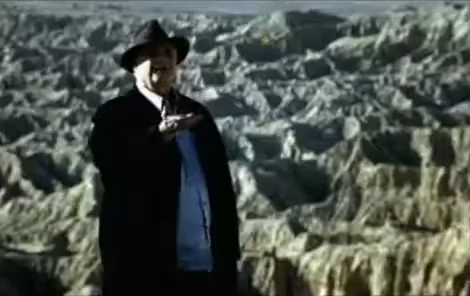
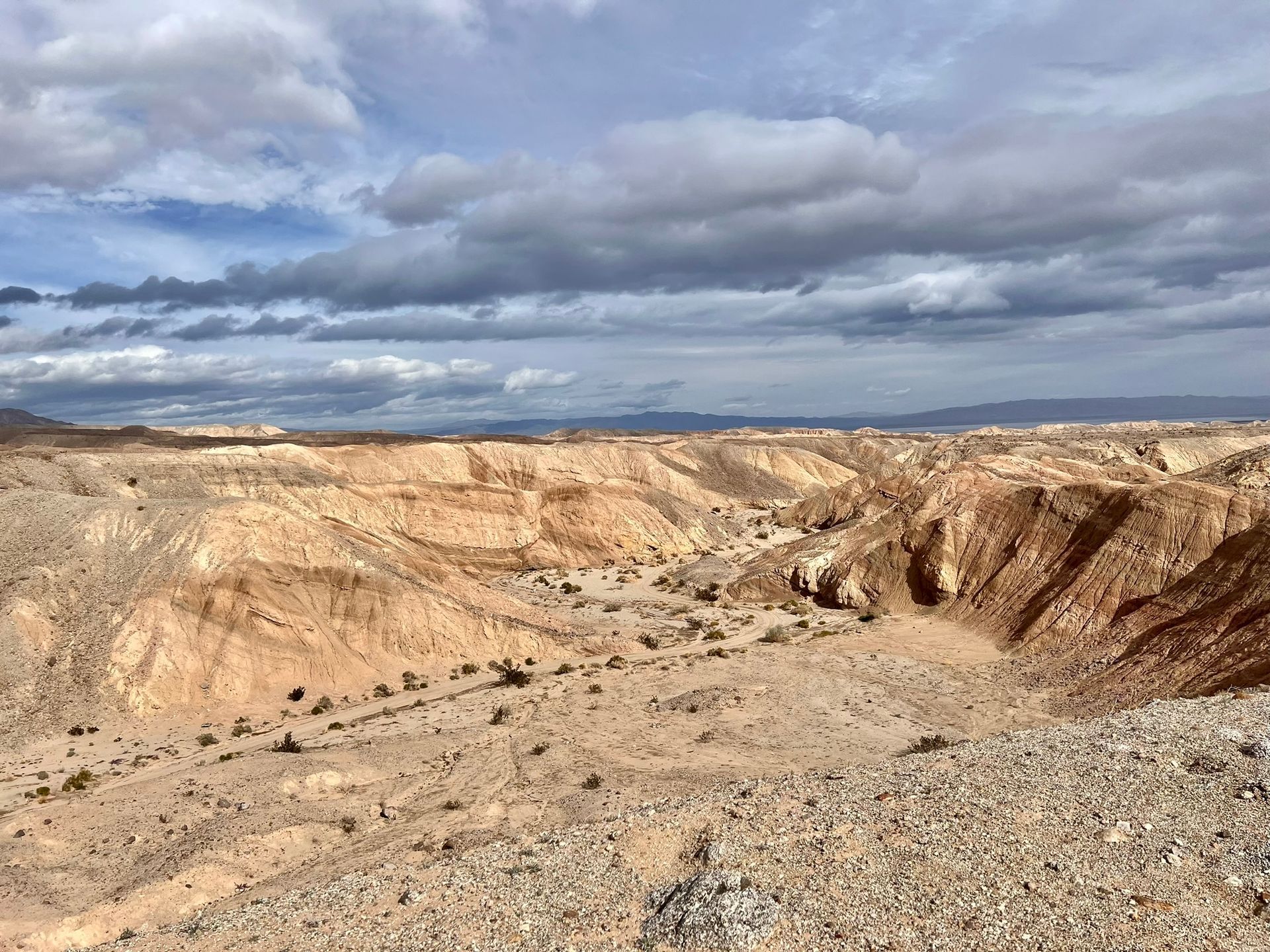
Font's Point, reached by a sandy wash road off County Route S22, delivers the classic panorama over the eroded Borrego Badlands. The road frequently requires high clearance and sometimes four-wheel drive; conditions change with every storm.
Dirt road exploring
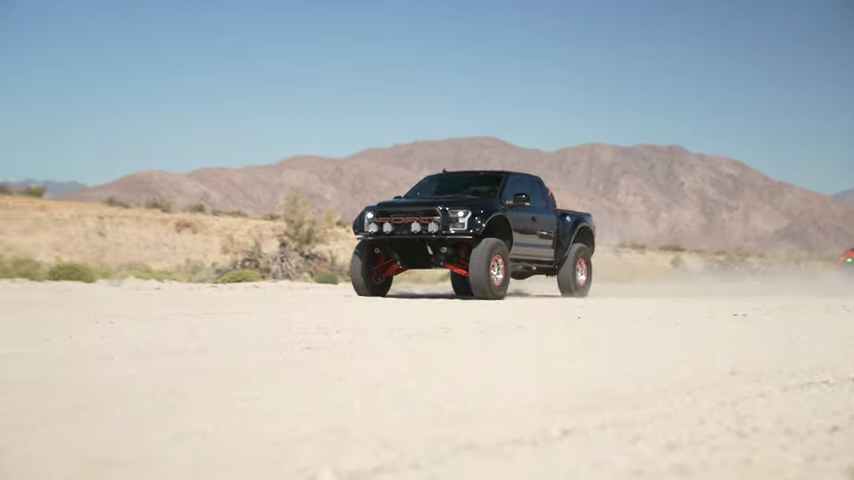
With roughly 500 miles of dirt roads, the park is a destination for backcountry driving. Most of those roads require a high-clearance four-wheel-drive vehicle. Stay on established routes, carry far more water than you think you need, and tell someone your plan — cell coverage across most of the park is nonexistent.
Wildlife watching
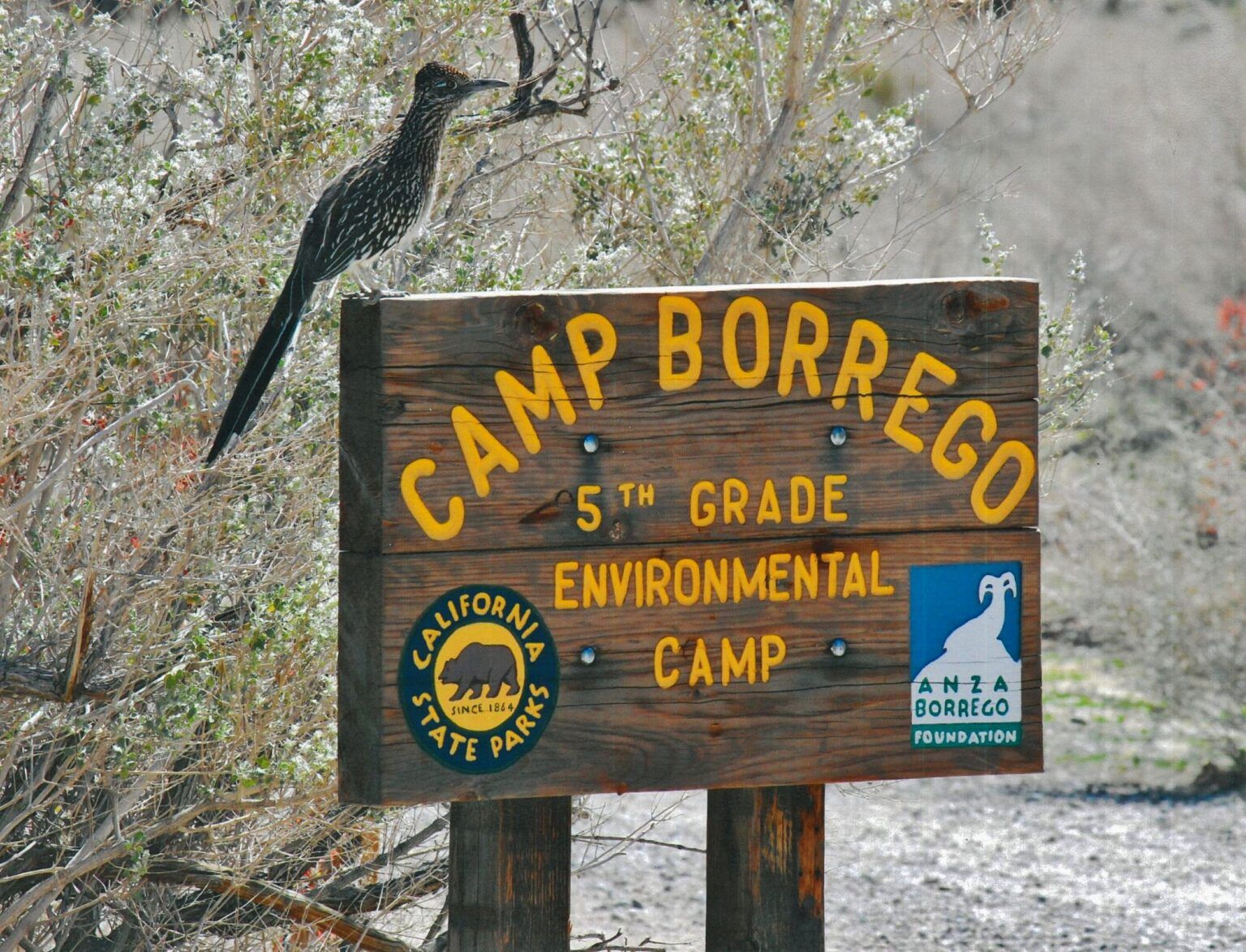
The park protects the endangered Peninsular bighorn sheep, which are elusive but occasionally visible on canyon walls near water sources. More commonly seen are roadrunners, desert cottontails, black-tailed jackrabbits, Gambel's quail and a wide range of reptiles.
The Galleta Meadows sculptures
The life-size metal sculptures scattered across the desert floor around Borrego Springs — prehistoric mammals, a serpent, horses, raptors — are the work of artist Ricardo Breceda. Worth knowing: they stand on private land at Galleta Meadows within the town of Borrego Springs, not inside the state park. They are free to visit and viewable from public roads at any hour.
Visitor information
Anza-Borrego Desert State Park Visitor Center
200 Palm Canyon Drive, Borrego Springs, CA 92004
Visitor Center: (760) 767-4205
Park Headquarters: (760) 767-5311
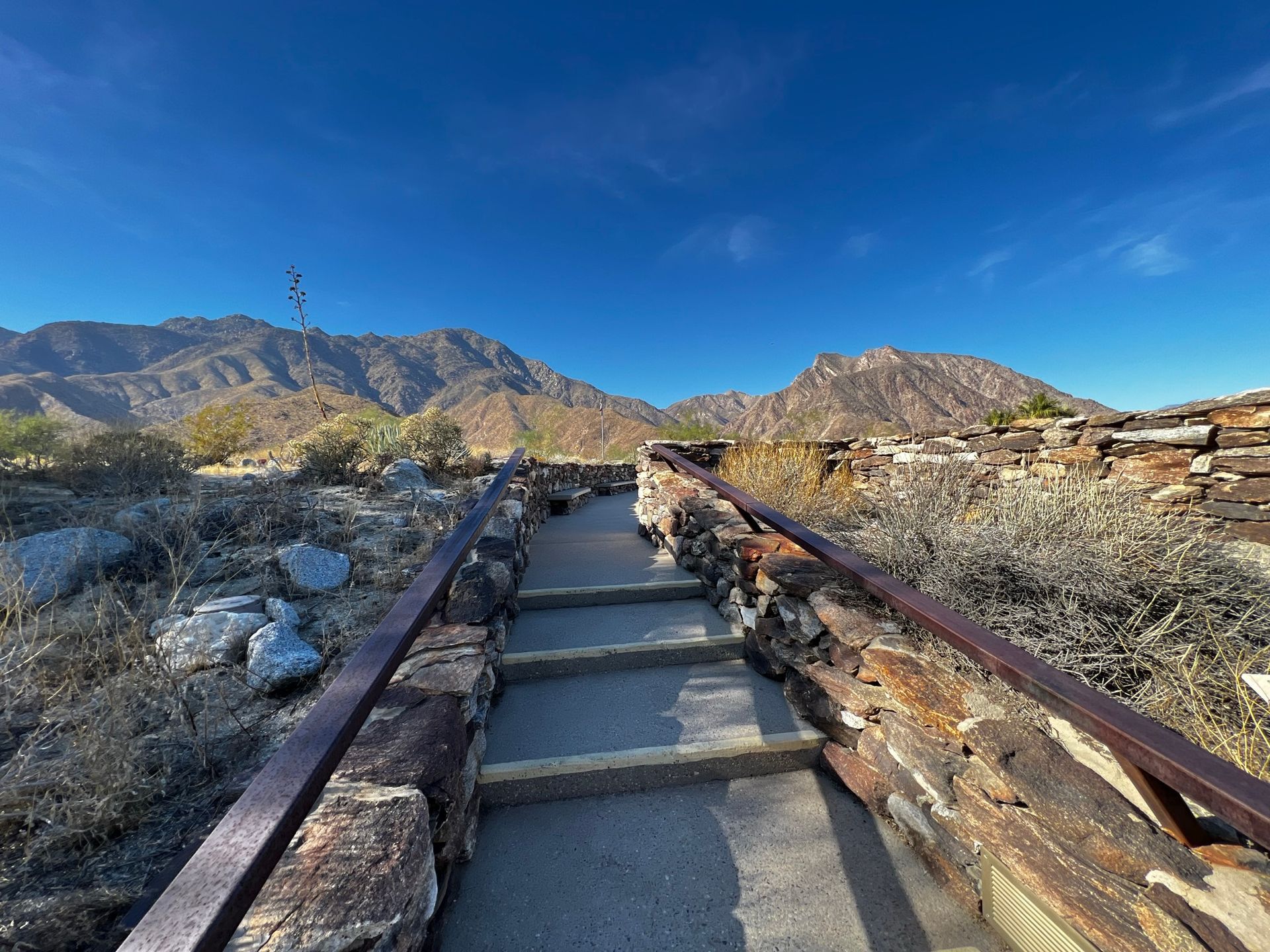
The Visitor Center is built partly underground to blend into the landscape — from the parking lot, follow the sidewalk down past the flagpole to the entrance. It houses interpretive exhibits on the park's geology, ecology and human history, along with a well-stocked bookstore.
Visitor Center hours: October through May, open daily 9am to 5pm. June through September, open weekends and holidays only. Hours can change seasonally — call ahead if you're making a special trip.
Fees: Day use is $10 per vehicle, collected at the Visitor Center, developed campgrounds, and at several popular access points including The Slot, Hellhole Canyon, Mountain Palm Springs, Bow Willow and Horse Camp. Your day use ticket is valid at any State Park in the Colorado Desert District for that date. The park itself has no gates and is open around the clock, year-round.
Navigation tip: If you're using GPS, enter the Visitor Center address rather than searching for the park by name. Searching "Anza-Borrego Desert State Park" in some map apps drops a pin in the middle of the desert and routes you onto a dirt road.
Getting here
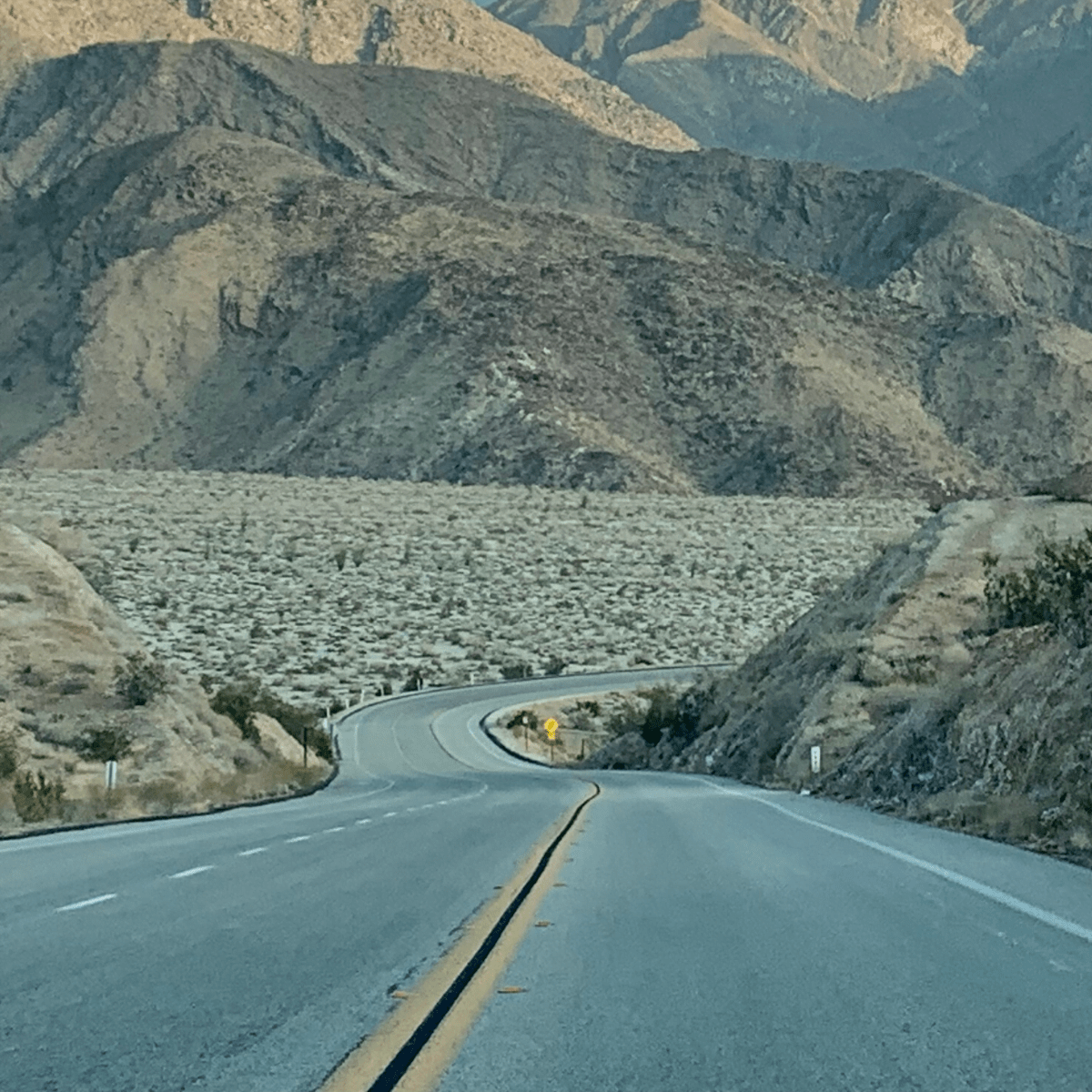
Borrego Springs is about a two-hour drive from San Diego and roughly two hours from Palm Springs. Most visitors approach from the east on Highways S22, S2 or 78. Coming from San Diego by way of Highways 79 and 78 adds a scenic climb through the mountains of Cuyamaca Rancho State Park before the descent to the desert floor.
When to visit, and desert safety
The comfortable season runs October through April. Summer is genuinely dangerous: daytime highs routinely exceed 110°F, and readings above 120°F are not unheard of. If you visit in summer, hike only in early morning, stay near your vehicle, and carry substantially more water than seems reasonable.
- Carry at least one gallon of water per person per day, plus extra in the vehicle.
- Cell service is unavailable across most of the park. Download offline maps before you leave town.
- Flash floods can fill washes and canyons with no rain falling where you're standing. Avoid narrow canyons when storms are anywhere in the region.
- Watch for rattlesnakes on trails and near rocks, especially at dawn and dusk in warm months.
- Fire restrictions change through the year. Check current conditions before planning any campfire.
Camping
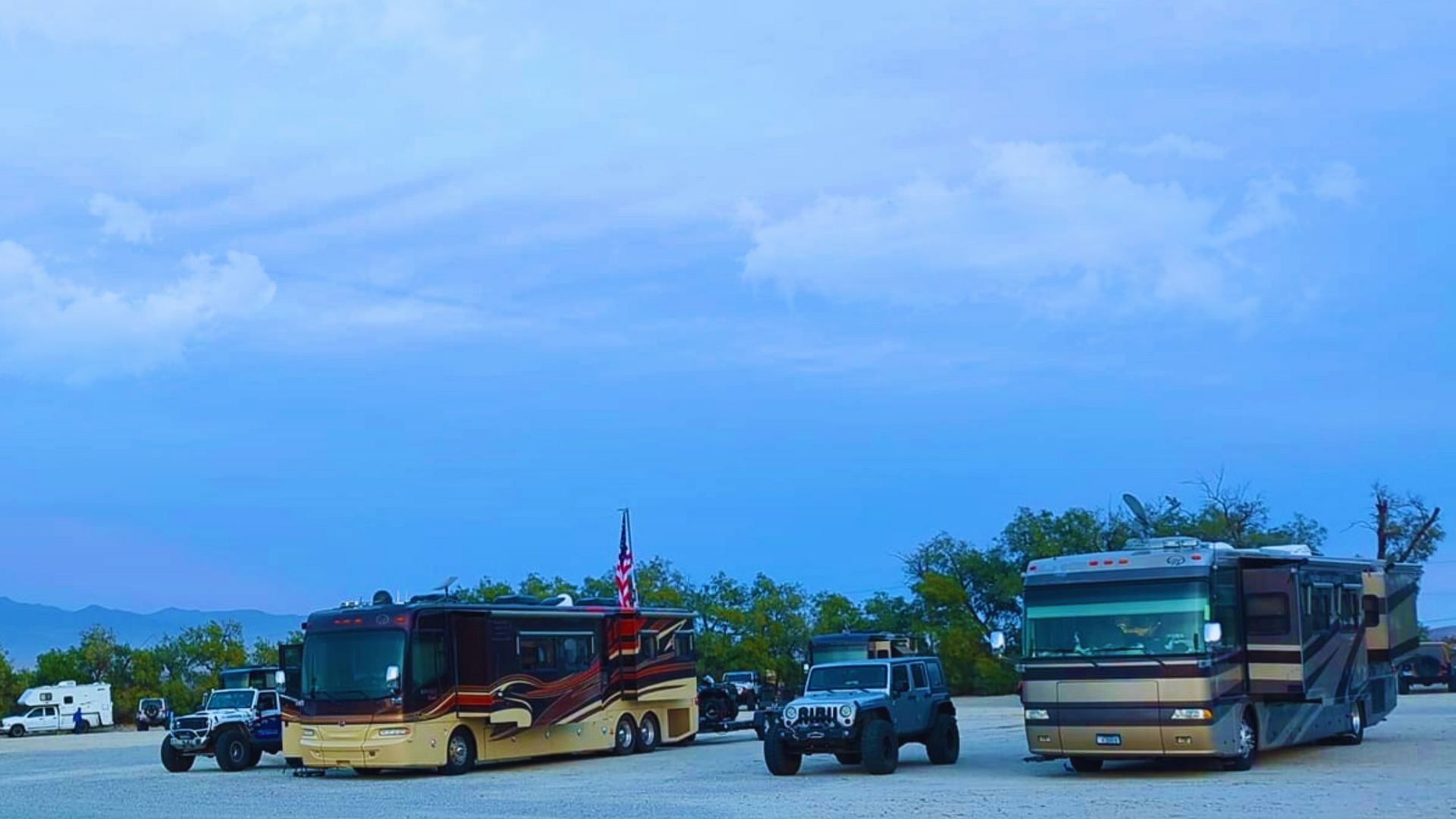
The park offers developed campgrounds with varying levels of service, from dry camping to sites with hookups, plus one of the few state park systems in California that permits dispersed backcountry camping. Dispersed campers should stay on established roads, come with a reliable vehicle, and pack out everything they bring in.
Frequently asked questions
How big is Anza-Borrego Desert State Park?
More than 600,000 acres, or roughly 1,000 square miles. It's the largest state park in California and the third largest in the United States, spanning parts of San Diego, Riverside and Imperial counties.
How much does it cost to enter Anza-Borrego?
Day use is $10 per vehicle, collected at the Visitor Center, developed campgrounds and several popular trailheads including The Slot and Hellhole Canyon. The park has no entrance gates and much of it can be accessed without a fee.
When is wildflower season at Anza-Borrego?
Annual wildflowers can appear from January through mid-April, with peak bloom most often between late February and early April. Timing varies year to year based on rainfall and temperature, so check current bloom reports before you travel.
Is Anza-Borrego a Dark Sky Park?
Yes. The park was designated an International Dark Sky Park in 2018 at Silver tier. Borrego Springs, the town at its center, has been an International Dark Sky Community since 2009 — the first in California.
Do I need four-wheel drive?
Not for the paved roads, the Visitor Center or the main campgrounds. The vast majority of the park's roughly 500 miles of dirt roads do require a high-clearance four-wheel-drive vehicle.
Is the park open at night?
Yes, the park is open 24 hours a day, year-round. The Visitor Center keeps limited hours: daily 9am to 5pm from October through May, and weekends and holidays only from June through September.
Fees, hours and trail conditions change. Verify current details with California State Parks at (760) 767-4205 before your visit. Last reviewed: August 2026.


Want to read something else about Borrego Springs? Give us some Ideas!
We're always on the lookout for fresh perspectives and hidden gems in Borrego Springs! Share your ideas and suggestions with us! or even submit your own article!